



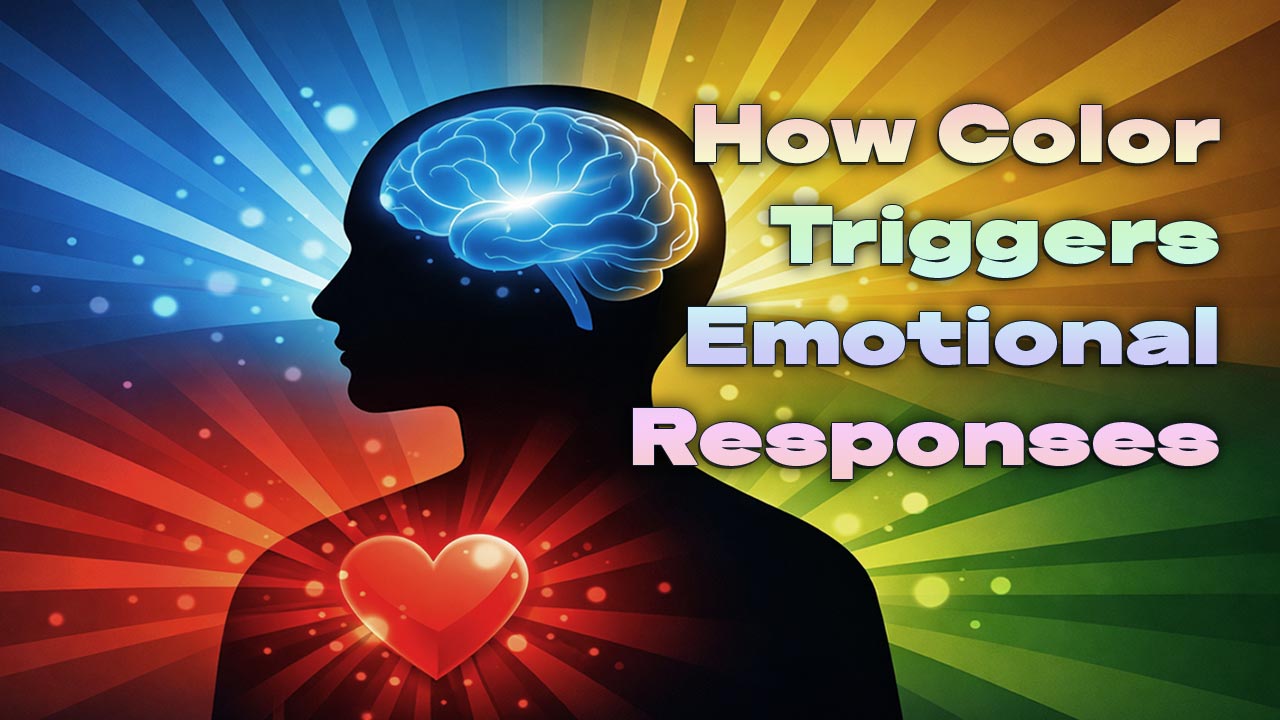
How Color Triggers Emotional Responses: A Complete Guide
Color shapes how we feel, think, and act long before logic takes over. From the moment we see a brand logo to the atmosphere of a room, color quietly drives emotional reactions that influence decisions, memory, and behavior. This guide explains how and why color triggers emotional responses, using psychology, neuroscience, and real-world applications across marketing, design, and technology.
Table of Contents
- The Science Behind Color and Emotion
- How the Brain Processes Color
- Common Colors and Their Emotional Effects
- Cultural Differences in Color Perception
- Color Psychology in Branding and Marketing
- Using Color Strategically in Digital and Physical Design
- Common Misconceptions About Color Psychology
- Top 5 Frequently Asked Questions
- Final Thoughts
- Resources
The Science Behind Color and Emotion
Color psychology studies how hues influence human emotion and behavior. Research shows that color perception activates emotional centers in the brain faster than conscious thought. This means color often shapes first impressions before words, images, or logic are processed. Studies published in neuroscience journals demonstrate that exposure to color can affect heart rate, blood pressure, and hormone release. Warm colors tend to stimulate, while cool colors often calm. These responses are not random. They are rooted in evolutionary survival mechanisms and learned associations.
How the Brain Processes Color
Color perception begins in the retina, where photoreceptor cells translate light wavelengths into neural signals. These signals travel to the visual cortex and then to the limbic system, the brain’s emotional processing center. Because color bypasses rational filtering, emotional reactions occur almost instantly. This explains why color influences mood, appetite, attention, and trust without conscious awareness. In user experience design and advertising, this neurological shortcut is strategically leveraged to guide behavior.
Common Colors and Their Emotional Effects
Red is associated with urgency, passion, and heightened energy. It increases heart rate and is often used to stimulate action, which is why it appears frequently in clearance sales and call-to-action buttons.
Blue evokes calm, trust, and stability. Research consistently links blue environments to lower stress levels, making it a dominant choice in finance, healthcare, and technology branding.
Yellow signals optimism and mental stimulation. It attracts attention quickly but can cause visual fatigue if overused. Designers often use yellow as an accent rather than a dominant color.
Green represents balance, growth, and safety. Because it sits in the middle of the visible spectrum, it requires minimal processing effort from the eyes, making it ideal for environments meant to reduce stress.
Black conveys authority, sophistication, and control. In luxury branding, black is used to communicate exclusivity and power.
Cultural Differences in Color Perception
Color meanings are not universal. Cultural context plays a significant role in emotional interpretation. While white symbolizes purity in many Western cultures, it is associated with mourning in several Eastern traditions. Global brands must adapt color strategies based on regional psychology. Failure to do so can result in misunderstanding, reduced trust, or negative emotional reactions. Cross-cultural studies show that color preference and symbolism are shaped by history, religion, and social norms, making localization essential in international marketing and product design.
Color Psychology in Branding and Marketing
Color is one of the strongest non-verbal brand signals. Research suggests that up to 90 percent of snap judgments about products are based on color alone. Brand recognition can increase by more than 80 percent when consistent color palettes are used across touchpoints. Fast-food brands often rely on reds and yellows to stimulate appetite and speed decision-making. Financial institutions favor blues to communicate security and trust. Technology companies frequently use minimalist color schemes to signal efficiency, innovation, and clarity. In digital marketing, color directly impacts conversion rates. Button color, background contrast, and visual hierarchy all influence where users focus and how quickly they act. Successful brands test color combinations continuously, relying on behavioral data rather than assumptions.
Using Color Strategically in Digital and Physical Design
Effective color strategy balances emotion with usability. In digital interfaces, contrast ensures accessibility while color guides attention and reduces cognitive load. Poor color choices can cause eye strain, confusion, or emotional discomfort. In physical spaces, color affects productivity, relaxation, and perception of time. Offices that incorporate blues and greens tend to improve focus and reduce fatigue. Retail environments use lighting and color temperature to influence how long customers stay and how they perceive value. Designers increasingly rely on evidence-based frameworks rather than intuition alone. Advances in eye-tracking and biometric feedback now allow teams to measure emotional responses to color in real time.
Common Misconceptions About Color Psychology
One common misconception is that color meanings are fixed and universal. In reality, emotional responses to color depend on context, culture, and personal experience. Another mistake is assuming brighter colors always perform better. Overstimulation can cause anxiety or decision paralysis. Subtlety often outperforms intensity, especially in professional or high-trust environments. Finally, color alone does not drive behavior. It works in combination with typography, layout, messaging, and user intent. Color amplifies emotion, but it cannot compensate for poor design or unclear value propositions.
Top 5 Frequently Asked Questions
Final Thoughts
Color is not decoration. It is a psychological signal that shapes emotion, trust, and decision-making at a subconscious level. When used intentionally, color becomes a strategic asset that influences behavior without saying a word. The most effective applications of color are grounded in science, validated by data, and adapted to context. Understanding how color triggers emotional responses empowers designers, marketers, and innovators to create experiences that resonate deeply and perform consistently.
Resources
- Journal of Consumer Research – Color and Consumer Behavior
- Frontiers in Psychology – Neural Mechanisms of Color Perception
- Institute for Color Research – Color Impact Studies
- American Psychological Association – Perception and Emotion


Leave A Comment