



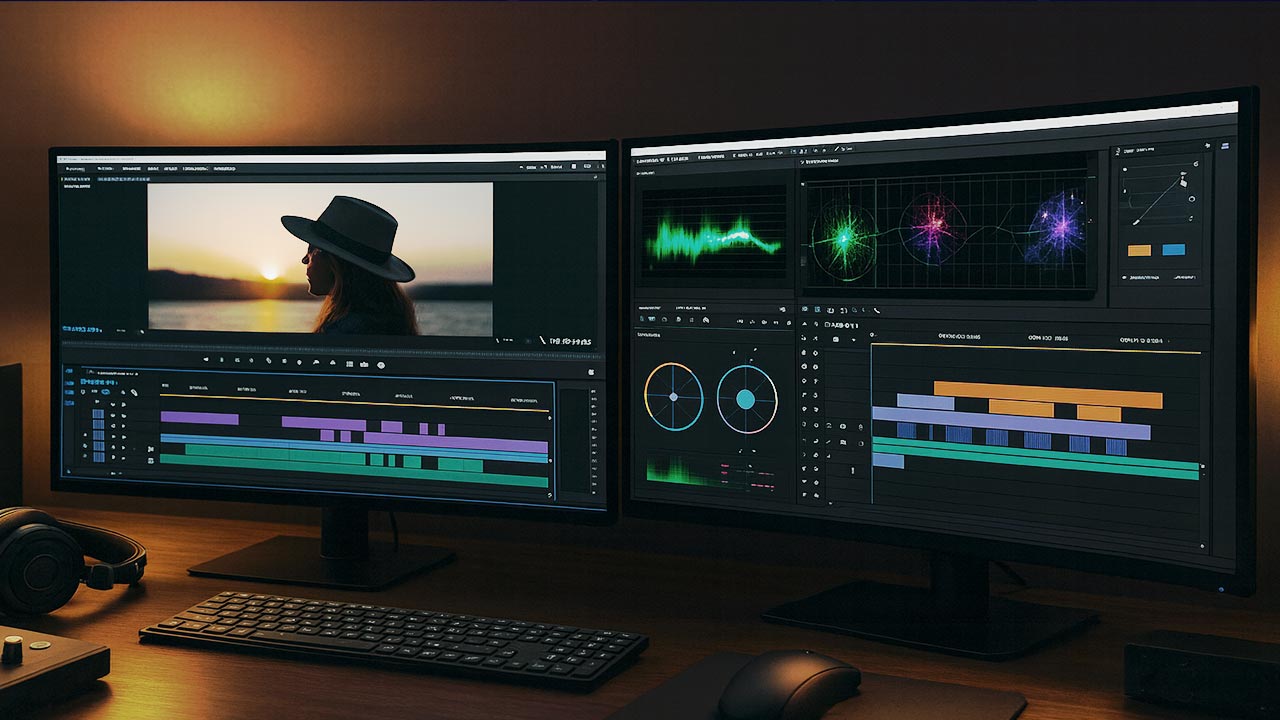
Freelance Post-Production: A Comprehensive Guide to Skills, Pricing, Workflow, and Industry Trends
Freelance post-production has rapidly become one of the most in-demand creative services in the digital economy. As studios, agencies, and content creators shift toward flexible, project-based labor, independent editors, colorists, sound designers, and VFX artists now play a central role in modern media production. This article breaks down how the industry works, where opportunities are growing, and how freelancers can position themselves for long-term success.
Table of Contents
- Industry Overview
- Core Skills Required
- Workflow and Collaboration
- Pricing Models and Rate Strategies
- Technology and Tools
- Market Trends and Future Outlook
- Top 5 Frequently Asked Questions
- Final Thoughts
- Resources
Industry Overview
Freelance post-production refers to independent professionals who handle editing, color grading, sound design, VFX, motion graphics, and finishing services. With streaming platforms producing record volumes of content and social media accelerating demand for high-quality video, the global post-production market is projected to exceed $36 billion by 2030. Freelancers benefit because studios increasingly adopt hybrid pipelines, allowing them to scale resources without expanding overhead.
Client expectations, however, have increased. Turnaround times are shorter, deliverable requirements have multiplied, and technical standards—HDR, 4K/8K workflows, immersive audio—require both expertise and ongoing education. Those who thrive treat freelancing as a business, not a side hustle.
Core Skills Required
Successful freelance post-production professionals combine creative intuition with technical mastery. Key competencies include:
1. Nonlinear editing
Expert-level proficiency in tools like Adobe Premiere Pro, DaVinci Resolve, and Avid Media Composer is essential. Editors must understand pacing, narrative flow, continuity, and multi-format delivery.
2. Color grading
Demand for colorists is rising due to HDR standards and platform-specific LUTs. Mastery of ACES, scopes, and camera color science is now expected across commercial and entertainment sectors.
3. Motion graphics and VFX
After Effects, Nuke, and Blender allow freelancers to provide add-on services that significantly increase project value.
4. Audio post-production
Sound design, dialogue cleanup, and mastering often determine whether a project feels professional.
5. Client communication
Soft skills—including expectation-setting, revision management, and feedback interpretation—are as important as technical skills. Freelancers who communicate clearly retain clients longer and command higher rates.
Workflow and Collaboration
Modern post-production workflows emphasize speed, version control, and multi-stakeholder collaboration.
Cloud-based asset management
Remote work surged during the pandemic and is now permanent. Platforms like Frame.io, LucidLink, and Iconik allow seamless review, dailies syncing, and media sharing.
Standardization
Freelancers must learn organizational conventions such as industry folder structures, proxy workflows, and naming systems. This reduces errors and supports scalable collaboration across teams.
Security
Studios increasingly require freelancers to comply with MPAA or TPN-level standards, including encrypted drives, VPN access, and watermarking.
Revision control and delivery
Efficient freelancers use clear version labels, maintain project logs, and automate deliverables (split-track audio, captions, platform-specific exports).
Pricing Models and Rate Strategies
Post-production pricing varies widely depending on specialization, region, and client type. Common structures include:
Hourly rates
Suitable for short edits, sound fixes, or low-uncertainty tasks. In the U.S., editors typically earn $45–$120 per hour, while colorists and VFX artists earn $75–$150 per hour.
Day rates
Often preferred for longer engagements. Day rates typically range from $350–$900 depending on expertise and tools provided.
Per-project pricing
Ideal for defined deliverables. Freelancers must account for revisions, render times, client communication, and licensing.
Value-based pricing
Increasingly popular as freelancers recognize the ROI delivered to clients. For example, social ad edits that generate millions of impressions justify higher fees.
Rate optimization strategies
Freelancers should track effective hourly rates, monitor scope creep, and use contracts specifying revision limits, kill fees, and payment schedules.
Technology and Tools
Staying competitive requires ongoing investment in both hardware and software.
Hardware
Workstations optimized for GPU acceleration support 4K/8K timelines, complex VFX, and real-time effects playback. High-speed storage—NVMe SSDs, RAID systems—reduces render and export bottlenecks.
Software ecosystems
Adobe Creative Cloud remains dominant, but DaVinci Resolve continues capturing market share due to its all-in-one pipeline. Unreal Engine and generative AI tools are also becoming mainstream for virtual production and rapid asset creation.
AI-accelerated workflows
AI assists with rotoscoping, speech cleanup, captioning, and rough cuts. While AI does not eliminate the need for human creativity, it shortens repetitive tasks and increases project margins.
Market Trends and Future Outlook
Several macro forces are reshaping freelance post-production:
1. Surge in short-form and branded content
Advertising and creator-driven content now outpace traditional broadcast work, increasing demand for fast turnaround editing.
2. Real-time engines
Unreal Engine, Unity, and real-time compositing shorten VFX pipelines and allow virtual sets to merge with traditional workflows.
3. Globalized talent competition
Remote work expands client access but also increases competition. Freelancers with specialization—color, motion design, audio—tend to outperform generalists.
4. Compliance and platform deliverables
Netflix, Amazon, and Hulu have strict technical standards. Freelancers familiar with IMF packages, HDR grading, and multi-format exports gain an edge.
5. Hybrid teams
Studios blend in-house staff with freelancers. This creates steady contract pipelines for reliable talent who understand collaboration tools and broadcast-level standards.
Top 5 Frequently Asked Questions
Final Thoughts
The most important takeaway is that freelance post-production is no longer just about technical ability—it is a business discipline. Success depends on specialization, workflow optimization, client communication, and strategic pricing. Creative talent may win clients, but process, professionalism, and adaptability keep them. As technology, platforms, and content formats evolve, freelancers who continuously refine their craft and embrace emerging tools will secure long-term relevance and competitive advantage.


Leave A Comment