



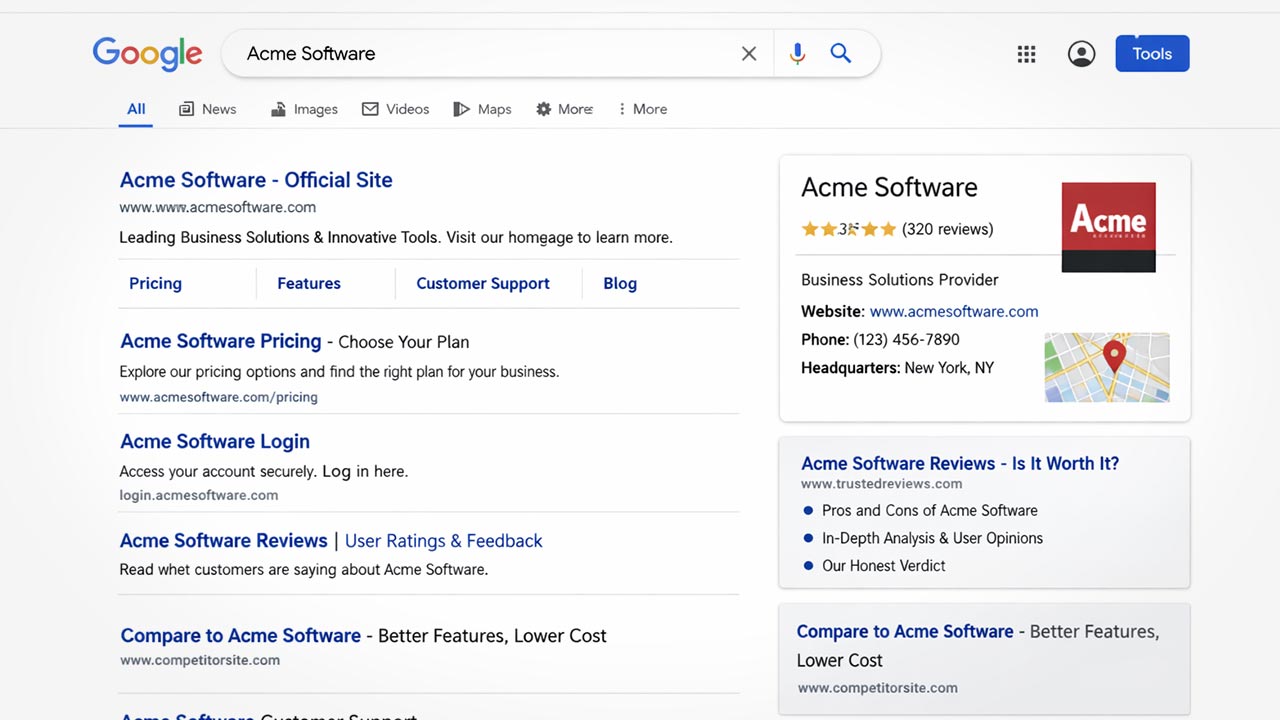
Do Your Brand Searches Always End Up on the Home Page?
Brand searches are often assumed to be simple navigational queries that automatically funnel users to a homepage. In practice, that assumption is increasingly wrong. Search engines now evaluate intent at a granular level, and branded queries frequently surface internal pages, knowledge panels, local listings, and third-party results instead of the homepage. Understanding why this happens is critical for protecting brand equity, improving conversion paths, and maintaining search visibility.
Table of Contents
- What Is a Brand Search?
- Why Brand Searches Don’t Always Land on the Home Page
- Search Intent and Brand Query Modifiers
- How Search Engines Evaluate Branded Queries
- The Hidden Risks of Losing Homepage Dominance
- How to Regain Control of Brand Search Results
- Measuring Brand Search Performance Correctly
- Top 5 Frequently Asked Questions
- Final Thoughts
- Resources
What Is a Brand Search?
A brand search occurs when a user explicitly includes a company, product, or trademarked name in a search query. Examples include searches like “Acme Software,” “Acme pricing,” or “Acme customer support.” These queries signal prior brand awareness and typically appear late in the buyer journey.
Historically, search engines treated these as purely navigational queries and defaulted to ranking the homepage first. However, modern search algorithms now treat brand queries as intent-rich signals rather than simple directions.
Why Brand Searches Don’t Always Land on the Home Page
Brand searches no longer guarantee homepage dominance for several reasons.
Search engines prioritize relevance over tradition. If a user searches “Brand X login,” the login page is more relevant than the homepage. If the query is “Brand X pricing,” a pricing page better satisfies intent.
Algorithmically, this shift aligns with engagement data. Studies consistently show that users are more likely to convert when they land directly on task-oriented pages instead of navigating from the homepage.
Another factor is SERP feature expansion. Brand searches often trigger sitelinks, featured snippets, local packs, app packs, and knowledge panels. These elements reduce the homepage’s monopoly on attention, even when it technically ranks first.
Search Intent and Brand Query Modifiers
Brand searches rarely occur in isolation. Most include modifiers that reshape intent.
Common modifier categories include transactional terms such as “pricing” or “buy,” navigational terms such as “login” or “dashboard,” support-driven terms like “help” or “contact,” and reputational terms such as “reviews” or “complaints.”
Each modifier represents a distinct intent class. Search engines map these intents to specific URLs, not brands as a whole. When the homepage does not directly satisfy the implied task, it is deprioritized.
This explains why well-optimized internal pages frequently outrank homepages for branded searches with clear intent signals.
How Search Engines Evaluate Branded Queries
Modern ranking systems rely on behavioral data, semantic relevance, and entity understanding. Search engines such as Google treat brands as entities with attributes, relationships, and sub-topics.
When a user performs a branded search, the algorithm evaluates:
- Topical relevance between the query and page content
- Historical click-through rates for similar queries
- User satisfaction metrics such as dwell time and pogo-sticking
- Structured data and internal linking clarity
- Brand authority signals across the web
If internal pages outperform the homepage on these metrics, they are surfaced preferentially.
The Hidden Risks of Losing Homepage Dominance
While internal page ranking is often beneficial, uncontrolled brand SERPs introduce risk.
Third-party review sites, resellers, or even competitors can outrank owned assets for branded queries with commercial intent. This diverts high-intent traffic away from conversion-optimized environments.
There is also reputational risk. Searches containing brand names and modifiers like “reviews” or “scam” often surface external content first. Without proactive optimization, brands lose narrative control at critical decision moments.
Additionally, inconsistent brand SERPs fragment analytics, making it harder to accurately attribute branded demand and measure brand equity growth.
How to Regain Control of Brand Search Results
Effective brand SERP control starts with intent-aligned architecture.
Each high-volume branded modifier should map to a dedicated, crawlable, indexable page. These pages must be internally linked from authoritative sections of the site and clearly labeled using semantic headings.
Structured data strengthens entity understanding. Organization, product, review, and FAQ schema help search engines disambiguate brand assets and assign relevance correctly.
Reputation management is equally critical. Actively publishing authoritative content on review, pricing, support, and comparison topics reduces reliance on third-party sites to define brand perception.
Finally, paid brand search campaigns can be used defensively to maintain visual dominance when organic results fragment.
Measuring Brand Search Performance Correctly
Homepage rankings alone are no longer a valid KPI for brand visibility.
Instead, measurement should focus on:
- Total branded click share across owned URLs
- SERP real estate coverage including sitelinks and panels
- Conversion rate by branded landing page type
- Presence of third-party results above the fold
- Consistency of messaging across branded queries
Advanced SEO teams treat brand SERPs as controlled ecosystems, not single-URL rankings.
Top 5 Frequently Asked Questions
Final Thoughts
Brand searches no longer belong exclusively to homepages. Search engines now prioritize intent fulfillment, not brand tradition. The most successful organizations treat branded queries as segmented demand signals and build dedicated experiences to match them. When brand SERPs are actively managed, they become powerful conversion engines rather than unpredictable traffic leaks.
Resources
- Google Search Central – Search Intent and Ranking Systems
- Ahrefs – Branded vs Non-Branded Search Analysis
- Search Engine Journal – Brand SERP Optimization Studies
- Moz – Navigational Query Behavior Research


Leave A Comment