



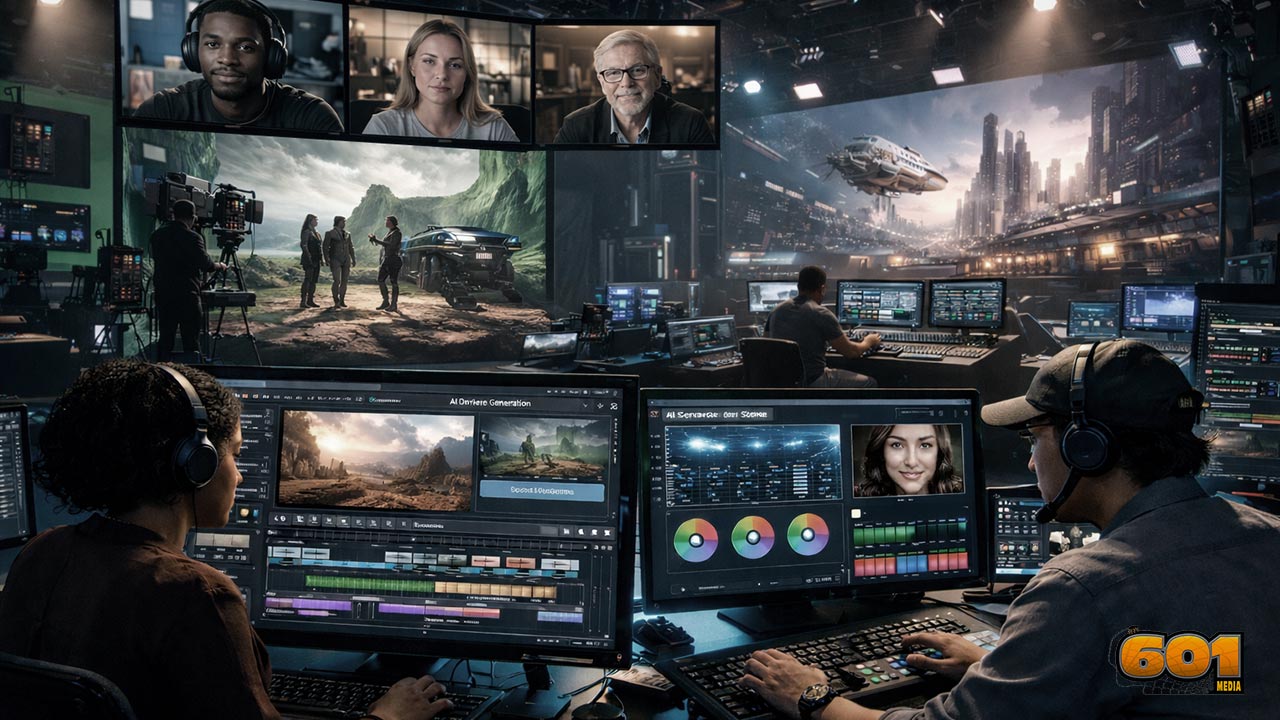
Digital Media Production Technology: How Innovation Is Reshaping Content Creation
Digital media production technology sits at the core of modern communication, entertainment, education, and commerce. From streaming platforms and social media to immersive virtual experiences and AI-driven content creation, technology has radically transformed how digital content is conceived, produced, distributed, and monetized. This article explores the technologies powering digital media production, their strategic implications, and how organizations can leverage them for sustainable competitive advantage.
Table of Contents
- What Is Digital Media Production Technology?
- The Evolution of Digital Media Production
- Core Technologies Powering Digital Media Production
- Modern Digital Media Production Workflows
- Business and Economic Impact
- Key Challenges and Risks
- Future Trends in Digital Media Production Technology
- Top 5 Frequently Asked Questions
- Final Thoughts
- Resources
What Is Digital Media Production Technology?
Digital media production technology refers to the integrated hardware, software, and workflows used to create, edit, manage, and distribute digital content. This includes video, audio, animation, graphics, interactive media, and immersive formats such as virtual reality and augmented reality.
At its core, digital media production technology enables creators to move from analog, linear processes to data-driven, non-linear, and highly scalable production models. Cloud-based platforms, real-time rendering engines, and AI-assisted tools now allow teams to collaborate globally while dramatically reducing production timelines and costs.
The Evolution of Digital Media Production
The evolution of digital media production mirrors broader technological shifts. Early digital production focused on digitizing analog workflows, replacing tape with digital files and physical editing suites with desktop software. As computing power increased, production quality improved while barriers to entry dropped.
The 2010s marked a turning point with the rise of high-speed internet, mobile devices, and social platforms. Content production became continuous rather than episodic, driven by algorithmic distribution and audience engagement metrics. Today, real-time production, cloud collaboration, and artificial intelligence define the industry, enabling content to be created faster, personalized at scale, and distributed instantly.
Core Technologies Powering Digital Media Production
Several foundational technologies now define modern digital media production ecosystems.
Non-linear editing systems allow creators to manipulate audio and video assets without sequential constraints, significantly increasing creative flexibility. Digital asset management platforms organize vast libraries of media, metadata, and rights information, supporting enterprise-scale operations.
Cloud computing has emerged as a critical enabler, offering elastic storage, remote rendering, and global collaboration. Real-time graphics engines support live virtual production, blending physical and digital environments seamlessly.
Artificial intelligence plays an increasingly central role. Machine learning algorithms automate tasks such as transcription, color correction, scene detection, and content tagging. Generative AI extends these capabilities by producing synthetic media, visual effects, and even narrative structures, raising both opportunities and ethical considerations.
Modern Digital Media Production Workflows
Modern workflows emphasize speed, flexibility, and collaboration. Pre-production now relies heavily on digital storyboarding, virtual scouting, and simulation tools that reduce uncertainty and cost. Production increasingly blends physical capture with real-time digital environments, minimizing post-production overhead.
Post-production workflows are shifting to the cloud, enabling distributed teams to edit, review, and approve content asynchronously. Version control, automated quality checks, and integrated analytics ensure consistency across platforms and formats.
Distribution is no longer a final step but an integrated component of production strategy. Content is optimized for multiple channels simultaneously, from long-form streaming to short-form social clips, with performance data feeding back into creative decisions.
Business and Economic Impact
Digital media production technology has redefined the economics of content creation. Production costs have decreased while output volume has increased, enabling new entrants and independent creators to compete with established studios.
For organizations, these technologies support scalable content strategies, faster time-to-market, and data-driven decision-making. Branded content, digital advertising, and interactive experiences now generate measurable returns through engagement analytics and conversion tracking.
According to industry research, organizations that integrate advanced production technologies report higher content efficiency, improved audience targeting, and stronger brand consistency across digital touchpoints.
Key Challenges and Risks
Despite its advantages, digital media production technology introduces significant challenges. Rapid technological change creates skill gaps and continuous training demands. Tool fragmentation can increase complexity and integration costs.
Data security and intellectual property protection are critical concerns, particularly in cloud-based workflows. AI-generated content raises legal and ethical questions related to authorship, authenticity, and bias.
Operational resilience is another risk. Over-reliance on automated systems without human oversight can lead to quality degradation or reputational damage if errors scale rapidly.
Future Trends in Digital Media Production Technology
The future of digital media production will be shaped by deeper automation, immersive experiences, and convergence between physical and digital environments. Virtual production techniques will become standard, reducing location dependency and environmental impact.
AI will move from task automation to creative augmentation, supporting ideation, personalization, and real-time adaptation of content. Blockchain-based systems may enhance rights management and monetization transparency.
From a strategic perspective, organizations that treat digital media production as a core capability rather than a support function will be best positioned to innovate, differentiate, and scale in an increasingly content-driven economy.
Top 5 Frequently Asked Questions
Final Thoughts
Digital media production technology is no longer just about creating content; it is about building adaptive, intelligent systems that connect creativity with strategy. Organizations that align technology, talent, and data will unlock new forms of value creation, while those that fail to evolve risk obsolescence in an attention-driven economy.
Resources
- PwC Global Entertainment and Media Outlook
- Deloitte Digital Media Trends Report
- McKinsey Technology and Innovation Insights
- World Economic Forum: Media, Entertainment, and Culture Reports


Leave A Comment