



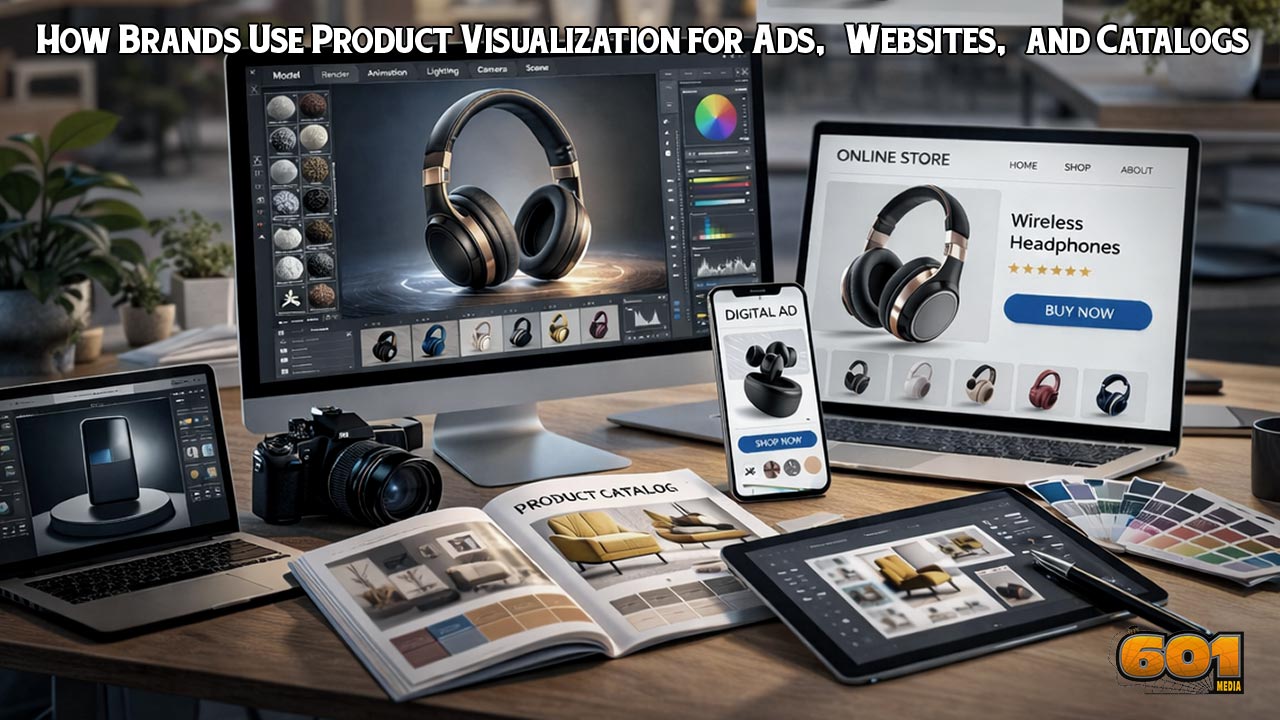
How Brands Use Product Visualization for Ads, Websites, and Catalogs
Modern brands compete in an environment where attention spans are short and visual experiences drive purchasing decisions. Product visualizations, high-quality digital representations of products created with 3D rendering and visualization technology, have become a powerful tool for marketing teams. From digital ads and e-commerce websites to printed catalogs, companies increasingly rely on product visualization to communicate value, reduce costs, and accelerate product launches. By replacing traditional photography with flexible digital assets, brands gain the ability to present products in countless environments, colors, and configurations without repeating expensive photoshoots.
Table of Contents
- What Is Product Visualization?
- Why Product Visualization Matters in Modern Marketing
- Using Product Visualizations in Advertising Campaigns
- Product Visualization on Websites and E-Commerce Platforms
- Product Visualization in Print and Digital Catalogs
- Key Business Benefits for Brands
- Technologies Behind Product Visualization
- Future Trends in Product Visualization
- Top 5 Frequently Asked Questions
- Final Thoughts
- Resources
What Is Product Visualization?
Product visualization refers to the creation of photorealistic digital images or animations that represent a product before or after it physically exists. These visuals are typically produced using 3D modeling, rendering engines, and specialized visualization software. Unlike traditional product photography, visualization uses computer-generated imagery (CGI). Designers build a digital model of the product, apply materials and lighting, and render it in environments that replicate real-world scenes.
This method is widely used in industries such as:
- Consumer electronics
- Furniture and home decor
- Automotive
- Fashion and accessories
- Industrial equipment
- Architecture and real estate
Companies like IKEA, Nike, and Tesla have publicly acknowledged using large volumes of CGI product imagery to create consistent marketing visuals across channels. Research from the advertising technology company Adobe suggests that visually engaging content increases conversion rates significantly. In e-commerce environments, high-quality product images can improve purchase likelihood by more than 30 percent. Product visualization allows brands to create these visuals faster, with greater flexibility and often lower long-term cost than traditional photography.
Why Product Visualization Matters in Modern Marketing
Marketing today is highly visual. Consumers scroll through thousands of images every day on websites, marketplaces, and social media platforms. The ability to present products with clarity and impact is therefore essential. Product visualization helps brands address several modern marketing challenges.
First, it enables faster product launches. Because visuals can be produced before manufacturing begins, companies can start marketing campaigns months earlier.
Second, it improves brand consistency. Digital product assets ensure that every advertisement, website image, and catalog page displays the product exactly the same way.
Third, it supports omnichannel marketing. A single 3D product model can generate images for:
- Digital advertisements
- E-commerce pages
- Social media posts
- Interactive configurators
- Printed catalogs
- Augmented reality experiences
This approach reduces duplication of work and ensures the brand message remains visually consistent across every channel.
Using Product Visualizations in Advertising Campaigns
Advertising campaigns require visuals that attract attention instantly. Product visualization gives marketing teams creative control to build striking scenes that would be expensive or impossible with traditional photography. For example, a smartphone brand launching a new device might create visuals showing the phone floating in dramatic lighting, surrounded by digital effects that emphasize performance and design.
Because the scene exists in a digital environment, creative teams can easily modify:
- Background environments
- Lighting conditions
- Product color variations
- Camera angles
- Motion graphics for video ads
This flexibility makes visualization especially valuable for digital advertising platforms such as Google Ads, Meta Ads, and programmatic display networks. Brands can generate dozens of ad variations quickly. Each variation may feature different colors, environments, or messaging while using the same underlying 3D product model. Marketing teams also benefit from rapid iteration. If a campaign needs updates—such as adding a seasonal theme or highlighting a specific feature—designers can update the scene digitally instead of scheduling another photoshoot.
Product Visualization on Websites and E-Commerce Platforms
E-commerce websites depend heavily on product visuals to communicate quality and value. Unlike physical retail stores, customers cannot touch or examine the product in person. Visualization technologies help bridge this gap. Brands increasingly use interactive 3D product viewers that allow customers to rotate and zoom products directly on the product page. Major retailers report measurable improvements in engagement when interactive visualization is used.
Key applications include:
- 360-degree product views
- Color and material configurators
- Exploded views showing internal components
- Animation demonstrating product functionality
For example, furniture retailers often allow shoppers to change upholstery colors and instantly preview how the sofa will look. These tools reduce purchase uncertainty. When customers can explore the product visually from multiple angles, they feel more confident making a purchase. Studies from e-commerce analytics firms indicate that interactive product visualization can increase conversion rates and reduce product returns because buyers understand exactly what they are purchasing.
Product Visualization in Print and Digital Catalogs
Catalogs remain an important sales channel in industries such as furniture, home improvement, fashion, and B2B manufacturing. Traditional catalog production required extensive photography sessions for every product and variation. This process was expensive and time consuming. Product visualization transforms catalog creation. Instead of photographing every product configuration, companies can generate images digitally from a single 3D model.
For example, a furniture brand might produce:
- 10 sofa styles
- 20 fabric options
- 5 color choices
Photographing every combination would require hundreds of images. With 3D visualization, those variations can be rendered automatically. Catalog designers can quickly generate consistent images that align with the brand’s visual guidelines. Visualization also simplifies updates. When a new color or design variation is introduced, marketers simply render a new image rather than scheduling another photoshoot. This efficiency allows brands to produce catalogs faster while keeping them visually rich and informative.
Key Business Benefits for Brands
Product visualization offers several strategic advantages beyond marketing aesthetics.
Cost efficiency
High-quality photoshoots involve studio rental, photographers, stylists, and logistics. Visualization shifts the investment toward digital asset creation, which can be reused across campaigns.
Speed to market
Companies can create marketing visuals before manufacturing begins. This accelerates product launches and allows pre-orders or early marketing campaigns.
Scalability
Once a product is modeled in 3D, marketers can generate unlimited variations, including color changes, accessories, and packaging updates.
Consistency
Visualization ensures every visual representation of the product remains consistent across advertising, websites, and printed materials.
Sustainability
Digital rendering reduces the need for physical prototypes and transportation associated with photoshoots, lowering environmental impact.
Technologies Behind Product Visualization
Several technologies power modern product visualization workflows.
3D modeling software
Designers build accurate digital models of products using tools such as CAD software or dedicated 3D modeling applications.
Rendering engines
Rendering software simulates realistic lighting, shadows, and materials. Advanced rendering engines use physically based rendering techniques to mimic how light interacts with surfaces.
Real-time visualization
Game-engine technology now allows brands to render products interactively. These real-time systems power online product configurators and immersive experiences.
Augmented reality
Some brands integrate visualization with augmented reality applications. Shoppers can place digital versions of products in their homes using smartphone cameras.
Artificial intelligence
AI tools are increasingly used to automate image generation, background creation, and visual variation production. Together, these technologies form a powerful pipeline that allows brands to produce large volumes of marketing visuals efficiently.
Future Trends in Product Visualization
The role of product visualization in marketing is expected to grow as technology advances. One major trend is the rise of immersive shopping experiences. Virtual showrooms and interactive environments allow customers to explore products in simulated spaces. Another trend involves personalization. Visualization systems can dynamically generate images tailored to individual customers based on preferences, browsing history, or geographic location. Artificial intelligence will also play a larger role. AI-powered rendering systems can automatically generate marketing visuals from product data and design files. Additionally, real-time rendering technologies are improving rapidly. As computing power increases, interactive 3D product experiences will become standard across many e-commerce websites. Brands that invest early in visualization infrastructure will gain a competitive advantage because they can produce marketing assets faster and adapt to new digital platforms more easily.
Top 5 Frequently Asked Questions
Final Thoughts
Product visualization has evolved from a niche design tool into a central component of modern marketing strategy. By transforming product data into flexible digital assets, brands gain the ability to create visually compelling campaigns across advertising, websites, and catalogs without the constraints of traditional photography. The most important takeaway is that visualization shifts product marketing from a physical production process to a scalable digital workflow. Once a product exists as a high-quality 3D model, companies can generate virtually unlimited visual content—new colors, environments, animations, and configurations—without rebuilding the process each time. This capability dramatically increases marketing agility. Brands can respond quickly to seasonal campaigns, regional preferences, and emerging digital platforms while maintaining visual consistency across every customer touchpoint. As rendering technologies, real-time graphics, and artificial intelligence continue to evolve, product visualization will become even more integrated into the marketing technology stack. Companies that invest in these capabilities today position themselves to deliver richer digital experiences, accelerate product launches, and engage customers more effectively in the increasingly visual economy.
Resources
- Adobe Digital Trends Report
- Nielsen Norman Group Research on E-commerce UX
- McKinsey Digital Consumer Insights
- Autodesk Visualization and Rendering Technologies
- IKEA Digital Visualization Strategy Case Studies


Leave A Comment