



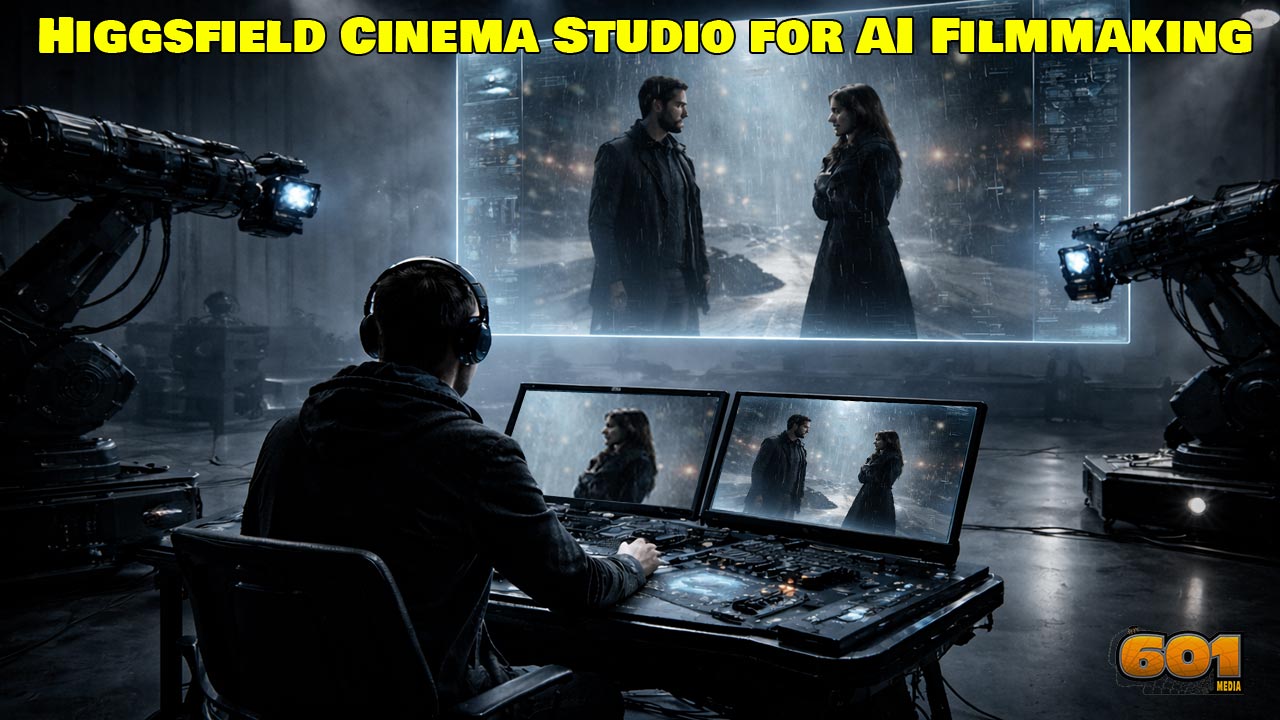
Higgsfield Cinema Studio for AI Filmmaking
Artificial intelligence is rapidly transforming the creative industries, and filmmaking sits at the center of this technological shift. Traditional film production requires a massive infrastructure: crews, cameras, actors, lighting teams, editors, visual effects artists, and months of post-production work. New AI platforms are compressing this entire pipeline into a digital environment where scenes can be generated, edited, and refined with unprecedented speed.
One of the most discussed platforms in this emerging ecosystem is Higgsfield Cinema Studio. Built around generative AI video models, the platform aims to provide filmmakers, content creators, and studios with cinematic-grade tools that can generate film scenes, camera movements, and storytelling visuals directly from prompts and structured inputs.
Rather than replacing filmmakers, Higgsfield Cinema Studio represents a shift toward AI-augmented filmmaking. Directors, writers, and producers gain the ability to rapidly prototype scenes, visualize scripts, test cinematography ideas, and create visual storytelling assets without the traditional barriers of cost, logistics, or equipment.
For technology leaders, creators, and media companies, understanding how AI filmmaking platforms work is increasingly critical. Higgsfield Cinema Studio demonstrates how machine learning, generative video models, and cinematic control systems are merging into a new production paradigm.
Table of Contents
- What Is Higgsfield Cinema Studio?
- The Rise of AI Filmmaking
- The Technology Behind Higgsfield Cinema Studio
- Cinematic Controls and Directorial Tools
- AI-Driven Film Production Workflow
- Real-World Use Cases for Creators and Studios
- Innovation and Technology Management Implications
- Challenges and Ethical Considerations
- The Future of AI Film Studios
- Top 5 Frequently Asked Questions
- Final Thoughts
- Resources
What Is Higgsfield Cinema Studio?
Higgsfield Cinema Studio is an AI-powered filmmaking platform designed to generate cinematic video content using advanced machine learning models. The system allows creators to transform prompts, storyboards, or scripts into visually rendered film sequences.
The platform focuses on one key challenge in generative media: achieving cinematic quality rather than simple animation or short clips. Most early AI video systems struggled with consistent camera movement, realistic lighting, and narrative continuity. Higgsfield Cinema Studio addresses these issues by integrating cinematic production concepts directly into the AI model architecture.
Users can generate scenes by describing characters, environments, and actions, while controlling cinematic parameters such as:
- Camera angle
- Shot type
- Lighting conditions
- Scene composition
- Motion direction
- Narrative continuity
This approach shifts AI filmmaking from random clip generation toward structured cinematic storytelling.
For independent filmmakers, the platform provides tools to visualize film concepts quickly. For studios and media companies, it offers rapid pre-visualization and concept development capabilities that traditionally require large VFX teams.
The Rise of AI Filmmaking
AI filmmaking did not appear overnight. It is the result of several technological breakthroughs across machine learning, computer vision, and generative modeling.
Several developments accelerated the field:
- Large-scale generative AI models
- Advances in diffusion-based video generation
- Massive training datasets of cinematic footage
- Improvements in GPU computing power
AI video generation models analyze patterns from thousands or millions of film frames. They learn how light interacts with environments, how cameras move through space, and how actors perform actions.
Research in generative video models has expanded rapidly since 2022. Companies and research labs have experimented with systems capable of generating short cinematic clips from textual descriptions.
Higgsfield Cinema Studio builds on this progress by focusing specifically on cinematic workflows rather than simple video generation. Instead of producing random scenes, the platform attempts to replicate real filmmaking techniques such as tracking shots, dolly movements, and shot framing.
From an innovation management perspective, this represents a shift from general-purpose AI tools toward vertical AI platforms optimized for specific industries.
The Technology Behind Higgsfield Cinema Studio
The core of Higgsfield Cinema Studio relies on generative AI architectures designed for video synthesis. These models use neural networks trained on large datasets of visual content to generate new video frames.
Several technical components enable the platform.
Generative diffusion models
Diffusion models gradually transform random noise into structured images or frames. These models have become the dominant approach for high-quality image and video generation.
Temporal consistency modeling
One of the hardest challenges in AI video is maintaining continuity between frames. Higgsfield uses temporal modeling techniques to ensure characters, lighting, and camera movements remain consistent.
Cinematic motion engines
The platform includes systems designed to simulate realistic camera movements such as pans, tracking shots, and crane shots.
Scene understanding systems
AI models interpret prompts and translate them into visual scenes that match narrative intent.
Multi-frame rendering pipelines
Instead of generating each frame independently, the system generates coherent sequences of frames, enabling smoother motion and realistic video output.
From a technology management standpoint, these capabilities require enormous computational resources and optimized AI infrastructure.
Cinematic Controls and Directorial Tools
One of the defining aspects of Higgsfield Cinema Studio is its emphasis on creative control. Many generative AI tools produce unpredictable outputs, which can frustrate professional creators.
Higgsfield attempts to bridge this gap by providing director-style controls.
Filmmakers can adjust parameters similar to those used in real film production:
- Shot composition
- Camera perspective
- Movement speed
- Lighting style
- Scene mood
For example, a director could generate a prompt describing a detective walking through a rain-soaked city street at night. The platform could then apply cinematic lighting, reflections, and dramatic camera angles to match the aesthetic of noir filmmaking.
These controls transform the platform into a creative partner rather than a simple automation tool.
AI-Driven Film Production Workflow
Traditional filmmaking involves a multi-stage production pipeline.
- Development
- Pre-production
- Production
- Post-production
- Distribution
AI platforms like Higgsfield Cinema Studio compress many of these stages.
Script visualization
Directors can convert scripts into visual storyboards almost instantly. Instead of manually sketching scenes, AI generates visual references.
Scene prototyping
Before filming begins, filmmakers can test multiple versions of scenes. This dramatically reduces production risk.
Virtual cinematography
Camera movements and shot compositions can be simulated digitally.
Rapid editing
Generated clips can be refined and adjusted without expensive reshoots.
Concept testing
Studios can evaluate visual concepts for films, games, and marketing campaigns quickly.
This workflow accelerates content creation while reducing financial barriers for smaller creators.
Real-World Use Cases for Creators and Studios
The impact of AI filmmaking platforms extends across multiple sectors of the media industry.
Independent filmmakers
AI tools allow small teams to produce cinematic visuals previously limited to major studios.
Advertising agencies
Brands can generate promotional video concepts quickly without large production budgets.
Game development
Game studios can prototype cinematic cutscenes during early design phases.
Content creators
Online creators can produce high-quality visual storytelling content for platforms like YouTube and streaming services.
Film studios
Large studios can use AI to generate pre-visualization assets for complex scenes.
In innovation management, these tools represent a democratization of production technology. Capabilities once limited to Hollywood-scale budgets are becoming accessible to individuals and small teams.
Innovation and Technology Management Implications
From a strategic perspective, AI filmmaking platforms represent disruptive innovation.
Several trends are emerging:
- Lower barriers to content production
- Shorter creative development cycles
- Rapid experimentation with storytelling formats
Media companies that adopt AI production tools early gain advantages in speed, efficiency, and creative experimentation.
Technology management leaders must consider how AI integrates into existing creative workflows. Successful adoption requires balancing automation with human creativity.
Organizations must also invest in new skill sets such as prompt design, AI-assisted cinematography, and digital storytelling.
Challenges and Ethical Considerations
Despite its potential, AI filmmaking raises important challenges.
Creative ownership
Questions remain about who owns AI-generated media and how training data influences outputs.
Visual authenticity
As AI video quality improves, distinguishing real footage from synthetic media becomes more difficult.
Employment impact
Automation may reshape certain roles within the film industry, particularly in early visualization and VFX prototyping.
Bias in training data
AI systems can reflect biases present in the data used to train them.
Technology leaders must approach these challenges responsibly while exploring the creative opportunities AI provides.
The Future of AI Film Studios
The next decade may see the emergence of fully AI-assisted film production environments.
Future platforms may include:
- Real-time AI cinematography
- Interactive story generation
- AI actors and digital performers
- Fully automated editing pipelines
As computing power increases and generative models improve, AI studios may evolve into collaborative creative ecosystems where humans and machines co-produce media.
Higgsfield Cinema Studio represents an early example of this vision.
Top 5 Frequently Asked Questions
Final Thoughts
The emergence of AI filmmaking platforms marks one of the most significant technological transformations in the history of visual storytelling. Higgsfield Cinema Studio illustrates how generative AI, cinematic design principles, and advanced computing infrastructure can merge to create an entirely new production paradigm.
For filmmakers, the platform opens creative possibilities that were previously restricted by cost, time, and technical barriers. Directors can experiment with ideas rapidly, visualize entire scenes before filming, and explore visual styles without traditional production constraints.
For technology leaders and innovation managers, the rise of AI film studios represents a strategic shift in media production. Organizations that successfully integrate AI into creative workflows will gain advantages in speed, efficiency, and experimentation.
However, the future of AI filmmaking will depend on responsible implementation. Balancing human creativity with machine intelligence will remain essential. The most successful creators will not simply rely on automation but will use AI as a collaborative tool that amplifies storytelling capabilities.
Higgsfield Cinema Studio demonstrates that the next era of filmmaking may not revolve around larger crews or bigger budgets, but around intelligent creative systems that expand what storytellers can imagine and produce.
Resources
- Stanford AI Index Report – Artificial Intelligence Trends
- MIT Technology Review – Generative AI and Media Production
- NVIDIA Research – Diffusion Models for Image and Video Generation
- McKinsey Digital – Generative AI and the Future of Creative Industries


Leave A Comment