



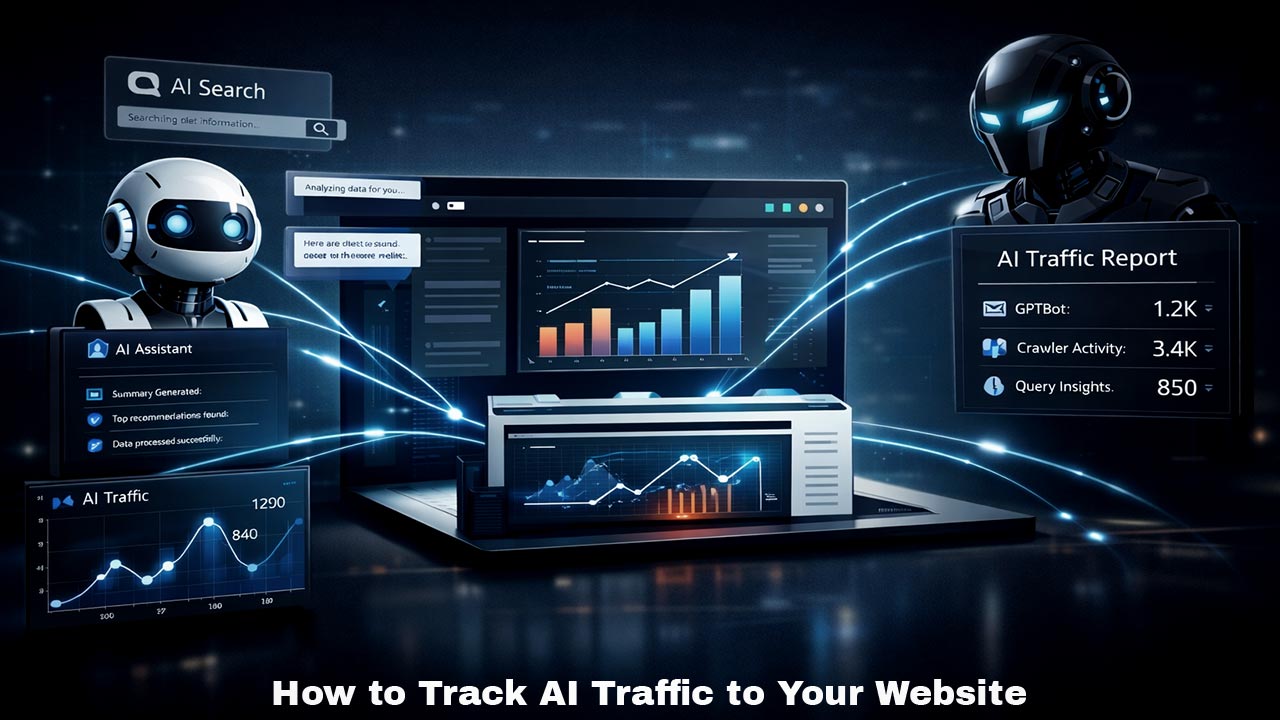
How to Track AI Traffic to Your Website
Understanding how artificial intelligence systems interact with your website is no longer optional. AI assistants, search engines, and autonomous agents now browse, summarize, and recommend content at scale. If you are not tracking this traffic, you are flying blind. This guide explains exactly how to identify, measure, and interpret AI-driven website traffic using practical tools and proven methods.
Table of Contents
- What Is AI Traffic?
- Why Tracking AI Traffic Matters
- Why Traditional Analytics Fall Short
- Identifying AI Traffic Using User Agents
- Server Log File Analysis
- Analytics Tools That Detect AI Traffic
- UTM and Referral Tracking Strategies
- Future-Proofing Your AI Traffic Strategy
- Top 5 Frequently Asked Questions
- Final Thoughts
- Resources
What Is AI Traffic?
AI traffic refers to visits generated by artificial intelligence systems rather than traditional human users. This includes large language models, AI-powered search engines, autonomous research agents, and content summarization tools. These systems crawl websites to extract information, answer questions, generate recommendations, or train models.
Unlike classic bots, AI traffic often behaves like a hybrid user. It fetches fewer pages but processes content more deeply. It may not execute JavaScript, accept cookies, or trigger standard engagement metrics.
Why Tracking AI Traffic Matters
AI systems increasingly influence how users discover information. When an AI assistant cites or summarizes your website, it becomes a distribution channel. If you cannot measure that interaction, you cannot optimize for it.
Tracking AI traffic helps you:
- Measure brand exposure inside AI answers
- Protect intellectual property
- Optimize content for AI retrieval
- Identify scraping or misuse
- Prepare for AI-driven search monetization
Organizations that monitor AI traffic early gain a competitive advantage as AI replaces traditional search behaviors.
Why Traditional Analytics Fall Short
Standard analytics platforms like Google Analytics rely on JavaScript execution, cookies, and browser events. Most AI systems do not trigger these mechanisms.
As a result:
- AI visits often appear as “direct” traffic
- Sessions may not be recorded at all
- Bounce rate and time-on-page become meaningless
- Referral data is usually missing
This is why AI traffic tracking requires server-level visibility rather than front-end scripts alone.
Identifying AI Traffic Using User Agents
Every request to your server includes a user-agent string. AI systems typically identify themselves, either transparently or partially.
Common AI-related user agents include:
- GPTBot
- Google-Extended
- ClaudeBot
- PerplexityBot
- Applebot
By filtering logs for these identifiers, you can isolate AI traffic patterns. This is one of the most reliable detection methods available today.
Server Log File Analysis
Server log analysis is the most accurate way to track AI traffic.
Logs capture:
- IP address
- User-agent
- Timestamp
- Requested URL
- HTTP status
Using log analysis tools such as GoAccess, AWStats, or custom scripts, you can identify:
- Which pages AI systems access
- Crawl frequency
- Geographic origin
- Bandwidth consumption
This data reveals what AI systems find valuable on your site.
Analytics Tools That Detect AI Traffic
Several analytics platforms now support AI-aware tracking:
- Cloudflare Web Analytics detects bot categories at the edge
- Matomo offers server-side tracking without cookies
- Plausible Analytics supports log-based analysis
- Splunk and ELK Stack enable advanced AI traffic dashboards
The key is choosing tools that operate at the infrastructure level, not just the browser.
UTM and Referral Tracking Strategies
Some AI tools pass referral headers when linking to sources. You can enhance visibility by:
- Creating AI-friendly landing pages
- Monitoring referrer domains associated with AI platforms
- Tagging outbound citations with UTM parameters
- Tracking spikes in traffic following AI feature releases
While imperfect, referral analysis helps correlate AI exposure with downstream human visits.
Future-Proofing Your AI Traffic Strategy
AI traffic will grow, fragment, and become more opaque. Future-proof strategies include:
- Implementing structured data for AI consumption
- Publishing machine-readable summaries
- Setting clear AI access policies via robots.txt
- Monitoring emerging AI crawlers monthly
Organizations that treat AI as a new audience—not just a bot—will win visibility in the next search era.
Top 5 Frequently Asked Questions
Final Thoughts
Tracking AI traffic is no longer an experimental task—it is a strategic necessity. As AI systems increasingly act as gatekeepers of information, your website’s visibility inside those systems determines future reach. The most important takeaway is this: front-end analytics alone are insufficient. Real insight comes from server-level data, user-agent analysis, and infrastructure-aware tools. Businesses that adapt now will understand their true digital audience—human and artificial alike.


Leave A Comment