


Make Business Happen: A Guide to Business Development for Sustainable Growth
Business development is no longer about short-term wins or opportunistic deals. In today’s volatile, competitive, and innovation-driven markets, sustainable growth depends on disciplined strategy, customer-centric execution, and long-term value creation. This guide explains how modern business development functions as a growth engine, aligning strategy, innovation, partnerships, and execution to build resilient organizations that scale with purpose.
Table of Contents
- What Business Development Really Means Today
- The Link Between Business Development and Sustainable Growth
- Building a Scalable Business Development Strategy
- Innovation as a Core Business Development Capability
- Strategic Partnerships and Ecosystem Thinking
- Measuring What Matters: KPIs and Performance
- Common Business Development Challenges and How to Overcome Them
- The Future of Business Development
- Top 5 Frequently Asked Questions
- Final Thoughts
- Resources
What Business Development Really Means Today
Business development is often misunderstood as sales, networking, or deal-making. In reality, it is a cross-functional discipline that connects strategy, marketing, innovation, finance, and operations. Its purpose is to identify, create, and capture long-term value. Modern business development focuses on market expansion, new revenue models, strategic alliances, and capability building. It asks fundamental questions: where should the business compete, how can it win, and what capabilities are required to sustain advantage over time. Organizations that treat business development as a strategic function rather than a transactional role are significantly more likely to outperform peers in revenue growth and profitability.
The Link Between Business Development and Sustainable Growth
Sustainable growth is growth that is profitable, repeatable, and resilient. Business development enables this by aligning opportunity identification with organizational capacity. Rather than chasing every opportunity, effective business development prioritizes opportunities that reinforce strategic positioning, deepen customer relationships, and strengthen competitive advantage. This reduces risk while increasing long-term returns. Research consistently shows that companies with clearly defined growth strategies and disciplined execution generate higher shareholder value and experience lower volatility during economic downturns.
Building a Scalable Business Development Strategy
A scalable business development strategy starts with clarity. Leadership must define target markets, ideal customers, and value propositions in concrete terms. Without this foundation, execution becomes fragmented and reactive. Next comes opportunity screening. High-performing organizations apply structured criteria to evaluate opportunities based on strategic fit, revenue potential, risk, and resource requirements. This ensures focus and prevents dilution of effort. Finally, governance matters. Clear ownership, decision rights, and feedback loops allow organizations to move quickly without sacrificing discipline.
Innovation as a Core Business Development Capability
Innovation is not limited to products or technology. Business model innovation, pricing innovation, and go-to-market innovation are equally powerful growth levers. Business development teams play a critical role in translating innovation into commercial outcomes. They connect customer insights with internal capabilities, ensuring that innovation efforts address real market needs. Companies that integrate innovation into business development processes are better positioned to anticipate market shifts and create new demand rather than reacting to competitors.
Strategic Partnerships and Ecosystem Thinking
Growth increasingly happens through ecosystems rather than isolated firms. Strategic partnerships allow organizations to access new markets, technologies, and capabilities faster and at lower cost. Effective partnerships are built on shared value creation, not short-term gains. Clear objectives, aligned incentives, and mutual trust are essential. Ecosystem-oriented business development recognizes that competitive advantage often comes from orchestration rather than ownership.
Measuring What Matters: KPIs and Performance
What gets measured gets managed. Business development requires a balanced set of metrics that capture both short-term performance and long-term impact. Leading indicators include pipeline quality, customer acquisition cost, and partnership health. Lagging indicators include revenue growth, margin expansion, and customer lifetime value. Organizations that rely solely on revenue metrics often miss early warning signs and overinvest in low-quality growth.
Common Business Development Challenges and How to Overcome Them
One of the most common challenges is misalignment between strategy and execution. This occurs when business development operates in isolation from core business units. Another challenge is capability gaps. Business development requires analytical thinking, relationship management, and strategic judgment. These skills must be intentionally developed. Finally, resistance to change can slow progress. Leadership commitment and clear communication are critical to overcoming organizational inertia.
The Future of Business Development
The future of business development will be data-driven, ecosystem-focused, and sustainability-oriented. Digital tools will enhance opportunity identification and decision-making, but human judgment will remain essential. Sustainability will increasingly shape growth strategies as customers, regulators, and investors demand responsible value creation. Organizations that invest now in modern business development capabilities will be better prepared to navigate uncertainty and capture emerging opportunities.
Top 5 Frequently Asked Questions
Final Thoughts
Business development is the discipline that turns ambition into action. When executed with strategic clarity, innovation, and discipline, it becomes a powerful engine for sustainable growth. The organizations that succeed are those that view growth not as a series of transactions, but as a deliberate, long-term capability built over time.
Resources
- Harvard Business Review – Growth Strategy and Business Development
- McKinsey & Company – The Granularity of Growth
- OECD – Sustainable Business Models
- Porter, M.E. – Competitive Strategy

Related Business Learning…

Effective Communication
Facilitate Effective Communication by Using Strategic Approaches That Create Clarity Communication is the foundation [...]

Challenges in the Workforce for Baby Boomers
Challenges in the Workforce for Baby Boomers The Baby Boomer generation, traditionally known for [...]

What is a microcredential?
Fireside chats with ChatGPT AI What is a microcredential? A microcredential is a short, [...]

Consent Advertising
The Engineering of Consent in Advertising Consent Advertising is a prime example of the [...]

Psychology of Closing
Understanding the Psychology of Closing The psychology of closing a deal is both an [...]

Lifelong learning
Developing an Eagerness to Learn: The Gateway to Lifelong Learning Lifelong learning is the [...]
Continue learning other topics…
How to Track AI Traffic to Your Website
How to Track AI Traffic to Your Website Understanding how artificial intelligence systems interact [...]
What Is Closed Loop Marketing?
What Is Closed Loop Marketing? A closed loop marketing system connects marketing activities directly [...]
The Best Approach to Marketing in 2026
Best Marketing Strategy for 2026: AI, Trust, and Growth Marketing in 2026 is defined [...]
What is Model Context Protocol (MCP)?
Model Context Protocol (MCP): How AI Finally Connects to Real Systems The Model Context [...]
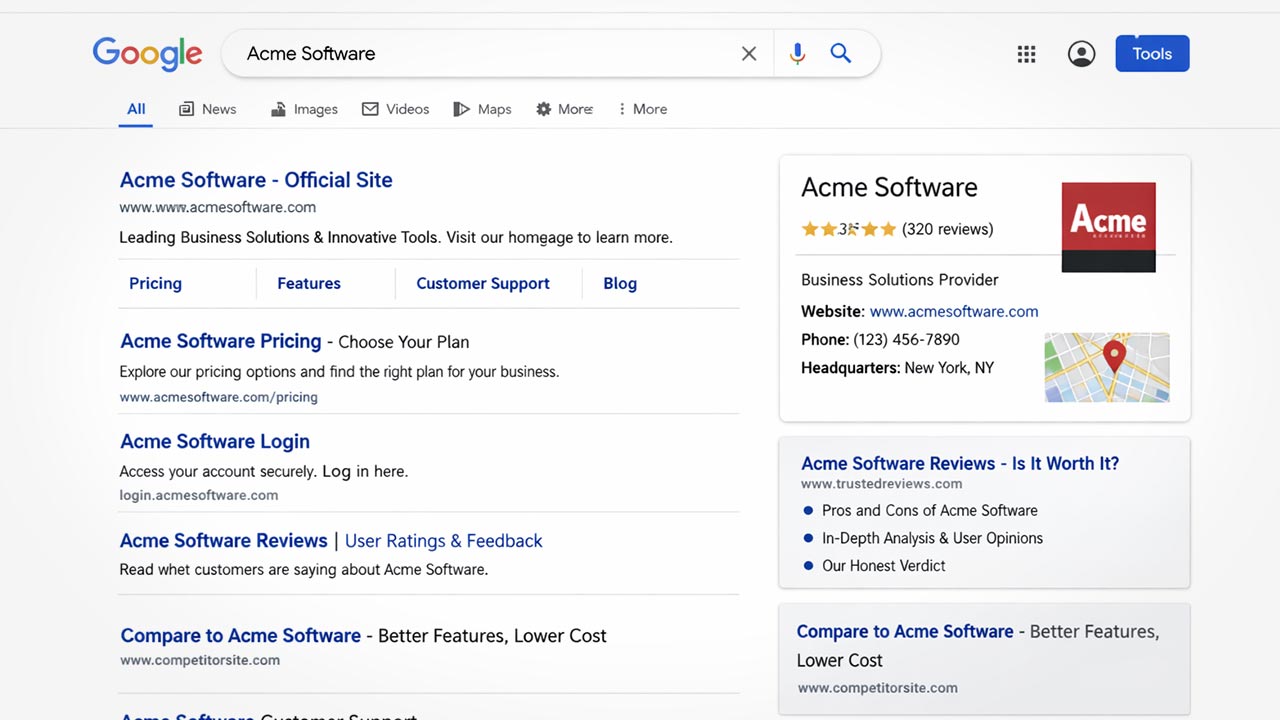
Do Your Brand Searches Always End Up on the Home Page?
Do Your Brand Searches Always End Up on the Home Page? Brand searches are [...]
Will Companies Invest More or Less in SEO in 2026?
Will Companies Invest More or Less in SEO in 2026? SEO budgets are no [...]

