



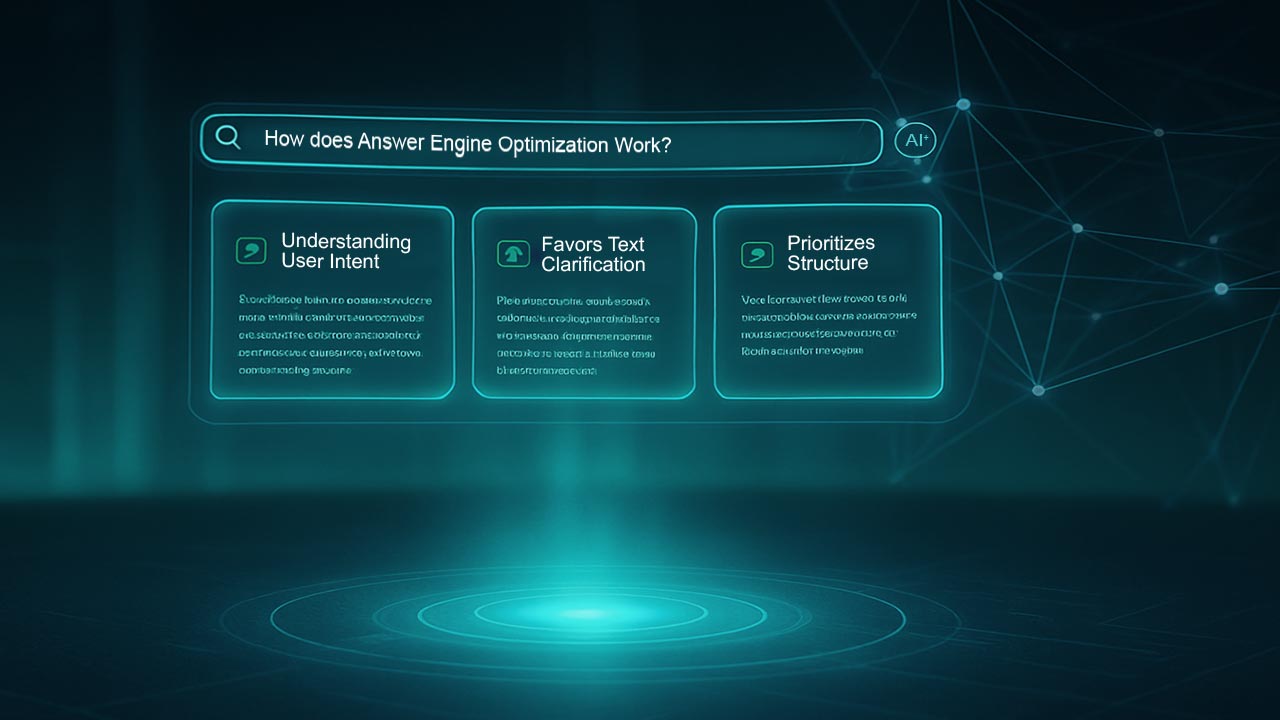
Optimizing for Answer Engine Optimization (AEO)
AEO is transforming how brands get discovered as search engines shift toward giving direct answers through AI-driven interfaces. This article breaks down how Answer Engine Optimization works, why it matters, and how to structure your content to stay visible in an era dominated by zero-click search experiences.
Table of Contents
- What Is Answer Engine Optimization?
- Why AEO Matters in 2025 and Beyond
- How Answer Engines Process and Rank Information
- Proven AEO Strategies That Work
- How to Measure AEO Performance
- Top 5 FAQs About Answer Engine Optimization
- Final Thoughts
- Resources
What Is Answer Engine Optimization?
Answer Engine Optimization (AEO) is the practice of optimizing digital content so AI-driven platforms—such as Google SGE, Bing Copilot, ChatGPT Search, and voice assistants—can extract, understand, and deliver your information as a direct answer.
Instead of ranking webpages in a traditional list, answer engines analyze content to identify the most credible, structured, and contextually rich response. The goal is not simply visibility—it is answer ownership.
This shift matters because most AI search interactions are zero-click, meaning users receive answers without visiting a website. AEO positions your brand to be the source those systems cite or pull from.
AEO vs SEO: Why They Are Not the Same
SEO is about ranking. AEO is about being *selected* as the authoritative answer.
Key differences:
- SEO focuses on keywords; AEO focuses on entities, context, and meaning.
- SEO serves human readers; AEO serves AI systems interpreting content.
- SEO aims for clicks; AEO often succeeds without a click at all.
AEO complements SEO, but the technical and structural requirements differ significantly.
Why AEO Matters in 2025 and Beyond
AI search adoption is accelerating. Several studies show:
- Zero-click searches now represent more than 60% of queries across major engines.
- Google SGE provides direct answers in over 80% of tested categories.
- Consumers increasingly trust AI-summarized responses over traditional search results.
This means brands that do not optimize for answer engines will gradually lose visibility—even if their SEO foundations are strong.
AEO is no longer optional; it is the next competitive frontier.
How Answer Engines Process and Rank Information
AI-driven search engines rely on:
- Natural Language Processing (NLP) to interpret questions.
- Entity mapping to understand relationships between concepts.
- Content scoring models to evaluate clarity, expertise, and structure.
- Citation confidence to determine which sources to reference.
- Semantic markup signals such as schema.org to enrich context.
These systems don’t look at keywords—they look at meaning, accuracy, source credibility, and the format of the answer.
Proven AEO Strategies That Work
Below are the most effective and research-backed tactics for improving answer visibility.
Structure for Answer Extraction
AI models prefer clean, systematic content. Highly extractable formats include:
- Definition-first paragraphs
- Logical list structures
- Short declarative statements
- FAQ blocks with question-answer pairs
The easier your content is to parse, the more likely it becomes an authoritative AI answer.
Implement Semantic Markup
Schema markup helps machines interpret meaning. For AEO, the priority schema types are:
- FAQPage
- HowTo
- Product
- Organization
- Article
- LocalBusiness
Extensive studies show that pages with highly specific schema are cited more frequently in AI-generated results.
Optimize Entities, Not Just Keywords
Answer engines rely heavily on knowledge graphs and entity relationships.
To strengthen entity signals:
- Use consistent naming for brands, products, and people.
- Provide contextual modifiers (industry, role, function).
- Create interlinked content hubs.
- Ensure your brand is referenced on authoritative external sources.
Entity optimization ensures AI systems can verify you as a credible part of the topic ecosystem.
Strengthen First-Party Expertise Signals
AI engines evaluate authoritativeness using:
- Expert bios
- Citations
- Publication histories
- External digital identity signals
- Brand consistency across platforms
This aligns with evolving E-E-A-T frameworks, where experience and expertise are essential for answer selection.
Build Multi-Format Answer Content
Different engines prefer different formats.
Google SGE favors text clarification.
ChatGPT Search prioritizes structured answers.
Bing Copilot often extracts from tables and lists.
Voice assistants prefer short spoken-form responses.
AEO requires multi-modal answer readiness, including:
- Text-based answers
- List and table summaries
- Fact sheets and data blocks
- Conversational Q&A segments
The more formats you supply, the more likely you are to be cited.
How to Measure AEO Performance
AEO measurement is emerging but currently relies on:
- AI search visibility tools (SGE monitors, Copilot extractors, ChatGPT Search ranking trackers)
- Brand citation frequency inside AI answer blocks
- Entity indexation within knowledge graph datasets
- Zero-click impression estimates via analytics platforms
- Voice assistant answer testing
While metric maturity is still evolving, visibility and citation tracking remain the dominant AEO success indicators.
Top 5 Frequently Asked Questions
Final Thoughts
The shift from search engines to **answer engines** represents the most profound transformation in digital discovery since the introduction of mobile-first indexing. The primary takeaway is clear: the future belongs to brands that can structure, validate, and communicate information in ways AI systems can immediately understand and trust. AEO is not just a trend—it is a foundational capability for maintaining relevance in a world where answers, not links, drive visibility.


Leave A Comment