



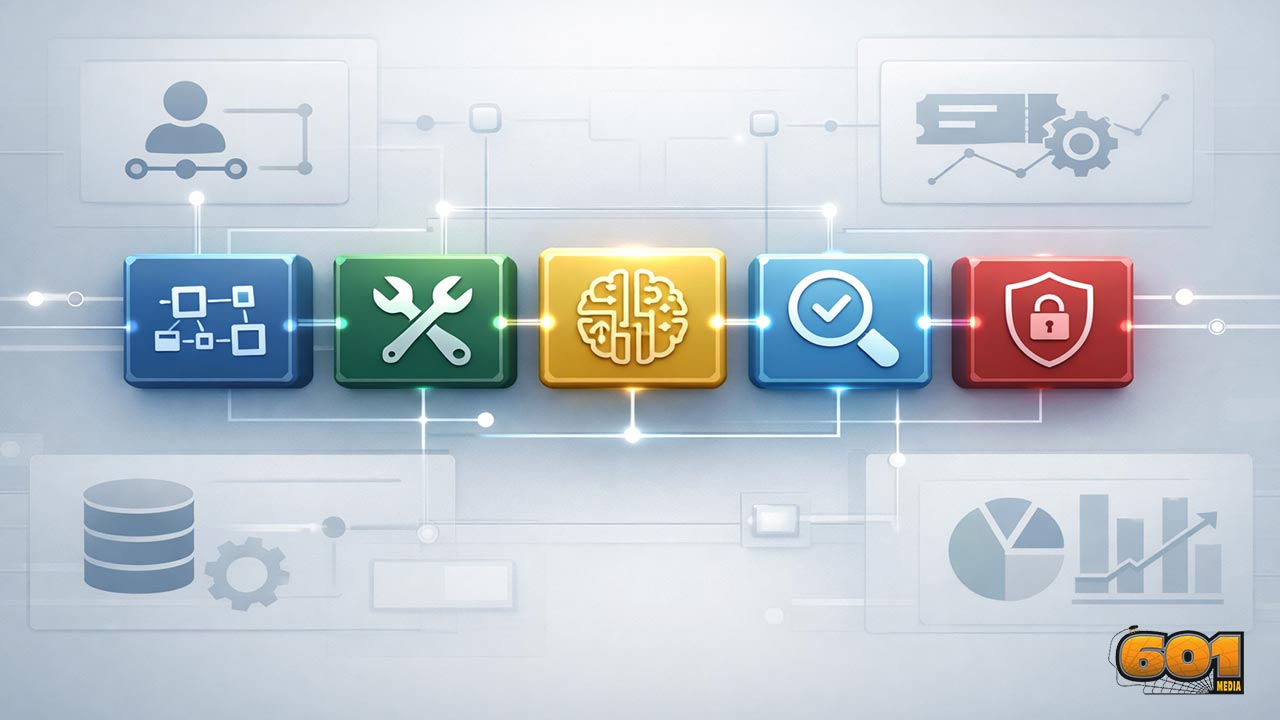
What Are Agent Skills? A Practical Guide to Capabilities That Make AI Agents Useful
Agent skills are packaged, reusable capabilities that let an AI agent reliably do things—not just talk about them. A skill typically combines (1) clear instructions, (2) tool access (APIs, databases, apps, code execution), (3) guardrails and policies, and (4) tests or examples—so an agent can plan, take actions, and produce consistent outcomes in real workflows.
Table of Contents
- What “Agent Skills” Means (In Plain English)
- Skills vs. Tools vs. Prompts vs. Agents
- The Core Building Blocks of a Skill
- Common Types of Agent Skills (With Examples)
- Designing Agent Skills That Don’t Break in Production
- How to Measure Skill Quality
- Why Agent Skills Matter to Innovation & Technology Management
- Top 5 Frequently Asked Questions
- Final Thoughts
- Resources
What “Agent Skills” Means (In Plain English)
An AI agent becomes valuable when it can repeatedly complete a task with predictable quality. “Agent skills” are the modular capabilities that make that repeatability possible. Think of skills as the agent’s job functions—each one narrowly defined, testable, and wired to the tools and data it needs.
In practice, a skill might be “Create a weekly KPI report,” “Reconcile invoices,” “Triage support tickets,” or “Book a shipment.” Each of those requires more than language fluency. It requires structured inputs, tool calls, business rules, error handling, and usually some governance.
The key idea: a skill is not just knowledge. It is knowledge + action + reliability. Skills are how agentic systems move from demos to durable operations.
Skills vs. Tools vs. Prompts vs. Agents
Teams often mix these concepts up, which leads to fragile builds. Here’s the clean separation that works well in production:
- Tool: A callable capability (API, function, database query, browser action, code runner). Tools are the “hands.”
- Prompt / Instruction: Guidance for behavior and formatting. Prompts are part of the “brain,” but they aren’t sufficient alone.
- Skill: A packaged solution for a specific outcome that combines instructions, tools, constraints, and tests.
- Agent: A runtime system that selects skills/tools, plans steps, manages context/memory, and executes.
A helpful mental model: tools are primitives, skills are products, agents are operating systems. You can swap tools without changing a skill’s goal, and you can swap skills without changing the agent framework—if you design your interfaces well.
Why Skills Become the “Product Unit” of Agentic Systems
Innovation and Technology Management is about turning capability into repeatable value. Skills are the unit that lets you do that because they are:
- Composable: You can chain skills into workflows.
- Governable: You can set access controls, audit trails, and policies per skill.
- Measurable: You can define acceptance tests and track performance over time.
- Transferable: Skills can move across teams, projects, and environments.
This is why many organizations evolve from “prompt libraries” to skill catalogs. A prompt library helps individuals. A skill catalog helps an enterprise.
Where Skills Live (App, SDK, Repo, Marketplace)
In real deployments, skills usually live in one of these places:
- In an agent framework/SDK: Skills are registered and invoked programmatically with structured tool schemas.
- In a repository: Skills are versioned like software, with tests, changelogs, and reviews.
- In a product UI: Non-developers can enable/disable skills and set policies.
- In a marketplace: Skills are shared across organizations, which raises trust and security considerations.
The more widely a skill is shared, the more important signing, scanning, and permission boundaries become—because a skill can be a powerful bridge into systems and data.
The Core Building Blocks of a Skill
A robust skill is engineered like a miniature product. It needs more than a clever prompt. Below are the building blocks that matter most.
Instruction Layer
This is the “behavior spec” of the skill. It defines the outcome, constraints, and success criteria. Strong instruction layers include:
- Purpose: What the skill is for and when to use it.
- Inputs: Required fields, optional fields, valid formats.
- Output contract: A stable format (JSON, table structure, ticket template, etc.).
- Business rules: Policies, thresholds, and “never do” constraints.
- Escalation logic: When the skill must ask a human or hand off to another skill/agent.
The best instruction layers read like crisp operational playbooks. They reduce ambiguity and make evaluation possible.
Tool Layer (Actions & Data)
Tools give skills real power. Typical tool categories include:
- Action tools: Create ticket, send email, post message, update CRM, run deployment.
- Data tools: Query database, search knowledge base, pull metrics, fetch orders.
- Transformation tools: Convert formats, summarize logs, parse invoices, normalize names.
- Verification tools: Validate policy compliance, check permissions, confirm totals.
Tool design matters because it shapes agent behavior. Clear schemas and guardrails reduce failure, lower cost, and improve traceability—especially when the agent must call multiple systems.
Memory Layer (Working Context vs. Long-Term)
Many skills need context beyond a single prompt. “Memory” can mean two different things:
- Working context: Session state, recent tool results, intermediate calculations.
- Long-term memory: Persistent preferences, historical decisions, organizational facts.
Memory is powerful but risky. Poor memory management can amplify errors (an agent can “learn” the wrong thing) and create privacy exposure. In mature systems, memory updates are treated like writes to a database: explicit, reviewable, and reversible.
Planning & Execution Layer
A skill often includes a “how” in addition to a “what.” Planning is how an agent turns intent into steps. In production, you typically want:
- Step decomposition: Break the task into checkable steps.
- Tool selection: Choose the right tool at the right time.
- Pre-flight checks: Validate inputs, permissions, and constraints before acting.
- Post-action verification: Confirm success and detect partial failures.
Good skills don’t just “try tools until something works.” They behave like competent operators: plan, act, verify, and document.
Evaluation & Observability Layer
If you can’t measure a skill, you can’t improve it. Evaluation layers commonly include:
- Golden test cases: Known inputs with expected outputs.
- Scenario suites: Edge cases (missing fields, conflicting policies, tool outages).
- Tracing: Full logs of prompts, tool calls, and outputs for debugging and audit.
- Human review loops: Sampling outputs and labeling errors.
The goal is to treat skills like software components: versioned, tested, monitored, and continuously improved.
Security & Governance Layer
Skills frequently touch sensitive systems. Governance is not “extra”—it’s foundational. A production-grade skill typically needs:
- Least privilege: Minimal tool permissions per skill.
- Policy enforcement: Spending limits, data handling rules, approval requirements.
- Prompt injection resistance: Defenses when the skill reads external content (email, web pages, docs).
- Auditability: Who ran it, what it did, what data it accessed, what it changed.
As agent adoption grows, organizations increasingly treat skills as “operational code” subject to the same controls as traditional automation.
Common Types of Agent Skills (With Examples)
Not all skills are created equal. Different classes of skills have different risk profiles, evaluation methods, and ROI patterns.
Transactional Skills
Transactional skills execute discrete actions with high clarity and strict correctness needs.
- Examples: “Issue a refund,” “Create a Jira ticket,” “Update Salesforce opportunity stage,” “Provision a new user.”
- Key risks: Wrong target, duplicate action, permission abuse, irreversible changes.
- Best practices: Pre-flight validation, idempotency keys, approval gates, post-action verification.
Analytical Skills
Analytical skills interpret data, generate insights, and recommend decisions.
- Examples: “Explain churn drivers,” “Forecast demand,” “Detect anomalies in spend.”
- Key risks: Data leakage, incorrect assumptions, overconfident recommendations.
- Best practices: Source citations internally, tool-based computation, uncertainty flags, reproducible outputs.
Knowledge & Retrieval Skills
These skills specialize in finding the right information and presenting it in a usable way.
- Examples: “Answer HR policy questions,” “Retrieve the latest SOP,” “Summarize incident history.”
- Key risks: Stale knowledge, hallucinated facts, prompt injection via untrusted documents.
- Best practices: Retrieval-augmented generation (RAG), trusted sources, access controls, content sanitization.
Creative & Production Skills
Production skills generate artifacts—documents, code, collateral—often with style constraints.
- Examples: “Draft a press release in brand voice,” “Generate unit tests,” “Create a training module outline.”
- Key risks: Brand drift, IP exposure, low factuality, inconsistent formatting.
- Best practices: Templates, style guides, constrained output formats, fact-check tooling when needed.
Orchestration & Multi-Agent Skills
Orchestration skills coordinate multiple tools and/or multiple agents.
- Examples: “Run month-end close,” “Coordinate incident response,” “Plan and execute a product launch checklist.”
- Key risks: Cascading failures, unclear ownership, hidden dependencies, long-running workflows.
- Best practices: Explicit handoffs, checkpoints, durable state, human-in-the-loop at critical steps.
Designing Agent Skills That Don’t Break in Production
Most failures happen because teams build “demo skills” instead of “operational skills.” Operational skills are designed for reality: incomplete inputs, messy systems, changing policies, and tool downtime.
Define a Skill Contract
Treat each skill like an internal API:
- Inputs: What fields are required? What are valid ranges?
- Outputs: What format is guaranteed? What fields are always present?
- Side effects: What systems can it change? What will it never change?
- Safety: What approvals are required? What data is forbidden?
This contract is what makes skills composable. Without it, orchestration becomes guesswork.
Design for Edge Cases, Not Just the Happy Path
Skills fail in predictable ways. Build defenses early:
- Missing data: Ask targeted questions, don’t guess.
- Conflicting rules: Prefer policy tools or deterministic rules over improvisation.
- Tool errors: Retry with backoff, degrade gracefully, escalate when needed.
- Ambiguous intent: Confirm the action before executing.
A skill that handles edge cases is the difference between “cool” and “trusted.”
Bounded Autonomy: When the Agent Can Act vs. Must Ask
A practical pattern is to define autonomy tiers per skill:
- Tier 0 (Suggest): Provide recommendations only.
- Tier 1 (Draft): Prepare an action for human approval (email draft, ticket draft).
- Tier 2 (Act with constraints): Execute actions under strict limits (e.g., refund < $50).
- Tier 3 (Autonomous): Execute end-to-end with monitoring and periodic review.
From a technology management standpoint, autonomy tiers are a governance lever: you can scale value while controlling risk.
Add a Test Harness Early
Skills that ship without tests tend to degrade as tools and policies change. A simple test harness can include:
- 10–20 representative tasks that matter to stakeholders
- Edge-case scenarios from real incidents
- Acceptance criteria: correctness, latency, cost, and compliance
- Regression checks on every change
This moves skills from “prompt art” to “engineering discipline.”
How to Measure Skill Quality
Agent skills are measurable if you define outcomes precisely. Measurement turns subjective debates into continuous improvement.
Practical Metrics
- Task success rate: Did the skill achieve the intended outcome?
- First-pass quality: How often does it succeed without human edits?
- Tool efficiency: Number of tool calls, redundant calls, and failed calls.
- Time-to-complete: End-to-end latency for the workflow.
- Escalation rate: How often it needs human input (and why).
- Cost per run: Model + tool costs + human review costs.
- Risk indicators: Policy violations, data exposure attempts, unsafe actions blocked.
These metrics map naturally to enterprise KPIs: productivity, quality, risk, and customer experience.
Common Failure Modes (and Fixes)
- Hallucinated facts: Add retrieval, require citations internally, use tool-based verification.
- Tool misuse: Improve tool descriptions, tighten schemas, add policy checks.
- Prompt injection: Treat external text as untrusted, sanitize inputs, constrain tool use.
- Over-autonomy: Add approvals, reduce permissions, introduce autonomy tiers.
- Silent partial failures: Add post-action checks and explicit success criteria.
Why Agent Skills Matter to Innovation & Technology Management
From an innovation lens, agent skills are how organizations operationalize AI. The strategic shift is subtle but important: you stop thinking in terms of “models,” and start thinking in terms of capabilities that can be owned, improved, and scaled.
Capability Maturity and “Skill Catalogs”
As agent adoption grows, organizations tend to create a catalog of approved skills—each with an owner, version history, tests, permissions, and usage analytics. This mirrors how enterprises manage:
- APIs (developer portals)
- Microservices (service catalogs)
- Data products (data catalogs)
- Automation (RPA bot inventories)
A skill catalog becomes a strategic asset: it captures organizational know-how in executable form.
Operating Model: From Pilots to Scale
Surveys in 2024–2026 consistently show many organizations experimenting with agentic AI, but fewer scaling it broadly. Skills help close that gap because they enforce repeatability and governance.
A practical operating model looks like this:
- Identify: high-volume workflows with clear success criteria
- Package: build skills with contracts, permissions, and tests
- Deploy: start with bounded autonomy and human review
- Measure: track success rate, cost, and incidents
- Scale: expand autonomy and coverage as reliability increases
This is portfolio management for agent capabilities—exactly the kind of discipline Innovation & Technology Management is built for.
Risk, Compliance, and Trust-by-Design
In many industries, the limiting factor for agent adoption is not model intelligence—it’s trust. Skills are where you embed trust:
- Access boundaries: what data can be touched and by whom
- Decision boundaries: what can be automated vs. must be approved
- Audit trails: what happened, with evidence
- Accountability: who owns the skill and its outcomes
When trust is designed in, adoption accelerates because stakeholders can see and manage risk rather than fear it.
Top 5 Frequently Asked Questions
Final Thoughts
The most important takeaway is this: agent skills are how you transform AI from a conversational tool into an operational capability. A model can generate text; a skill can complete work.
When you package a skill correctly—clear contract, tool wiring, bounded autonomy, verification, and observability—you create something your organization can trust, reuse, and improve. That’s not just engineering hygiene; it’s a strategic advantage. It allows innovation teams to scale impact without scaling chaos, and it gives leaders a concrete way to govern agentic AI: skill by skill, with measurable performance and controlled risk.
If you’re building with AI agents today, don’t ask only “What can the model do?” Ask “What skills can we productize?” That shift in thinking is where durable value starts.
Resources
- OpenAI API Guide: Function calling (tool calling)
- OpenAI API Guide: Agents SDK
- OpenAI Agents SDK (Python) documentation
- OpenAI Codex: Agent Skills
- McKinsey: The State of AI (Global Survey 2025)
- Stanford HAI: AI Index Report 2025
- IBM: What are AI agents?
- OpenAI Cookbook: Using PLANS.md / AGENTS.md for coding agents
- ArXiv: How Memory Management Impacts LLM Agents (empirical study)
- KPMG: AI Quarterly Pulse Survey (agentic AI adoption)
- PwC: AI Agent Survey


Leave A Comment