



The Future of Digital Media Design in 2026: Trends, Tools & Skills
Digital media design is entering a decisive phase in 2026. The convergence of artificial intelligence, immersive technologies, automation, and creator-centric platforms is redefining how digital experiences are conceived, built, and scaled. Designers are no longer just visual creators—they are system thinkers, experience architects, and innovation drivers. Todays article explores the most influential digital media design trends shaping 2026, the tools powering them, and what these changes mean for designers, businesses, and product teams navigating an increasingly experience-driven economy.
Table of Contents
- AI-Driven Design Becomes the Standard
- Immersive Media Moves Mainstream
- Real-Time & Cloud-Native Workflows
- Ethical, Inclusive, and Responsible Design
- No-Code, Low-Code & Design Automation
- The Future Skillset for Digital Media Designers
- Essential Digital Media Design Tools in 2026
- Top 5 Frequently Asked Questions
- Final Thoughts
- Resources
AI-Driven Design Becomes the Standard
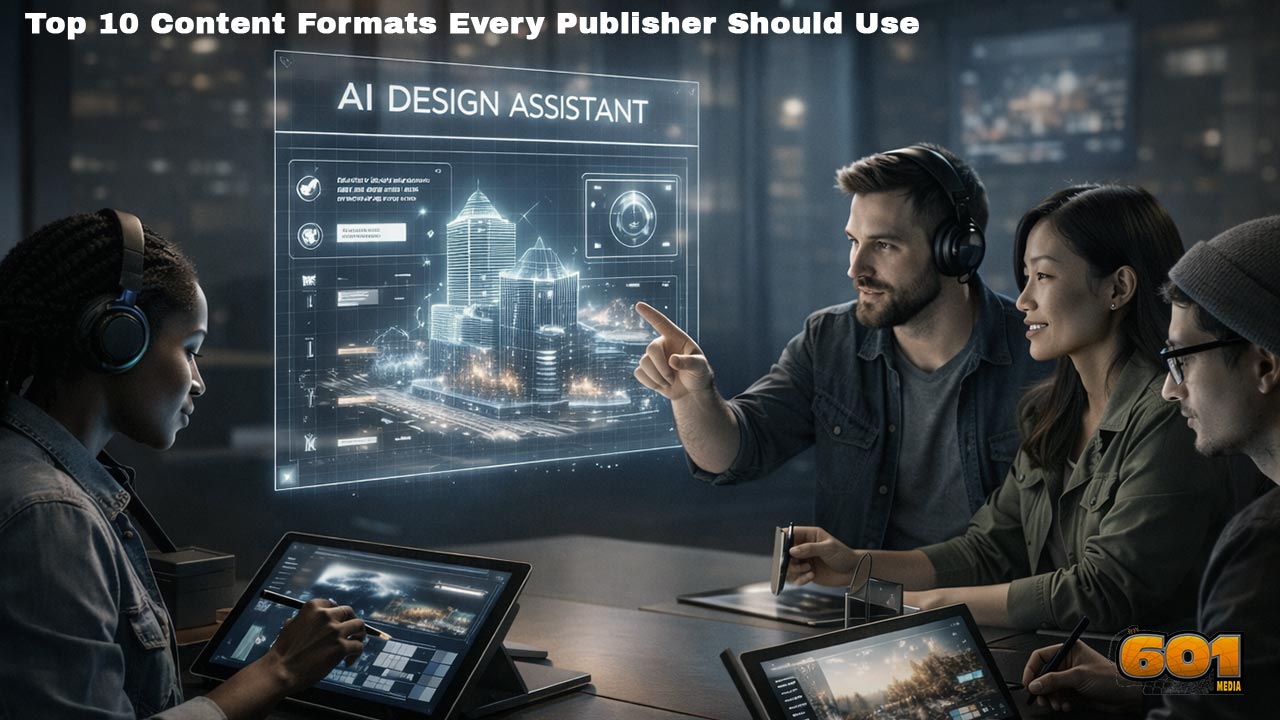
By 2026, artificial intelligence is no longer an enhancement—it is foundational to digital media design. AI systems now assist with ideation, layout generation, color theory, typography pairing, motion sequencing, and even brand consistency enforcement. Generative design models allow designers to explore hundreds of visual directions in minutes, dramatically compressing concept cycles. Predictive UX engines simulate user behavior before a design is shipped, reducing costly post-launch revisions. Platforms such as Adobe and Figma have embedded AI copilots that function less like tools and more like creative partners. Designers remain in control, but AI handles repetition, optimization, and scale. The competitive advantage in 2026 lies in knowing how to direct AI creatively, not compete with it.
Immersive Media Moves Mainstream
Immersive design is no longer confined to gaming or experimental marketing. Augmented reality, virtual reality, and spatial computing are now integrated into retail, education, healthcare, and enterprise training. Brands use immersive environments to replace static product pages with interactive experiences. Training simulations outperform video by improving knowledge retention by over 75%, according to multiple UX research studies conducted between 2023 and 2025. Designers must now think in 3D space, motion physics, sound design, and interaction depth. Traditional flat UI principles still apply—but only as a foundation for spatial experience design.
Real-Time & Cloud-Native Workflows
Design workflows in 2026 are fully cloud-native. Teams design, test, iterate, and deploy in real time across global locations. Version control conflicts, static handoffs, and siloed feedback loops are increasingly obsolete. Live co-creation environments enable designers, developers, product managers, and marketers to collaborate simultaneously on a single source of truth. This shift reduces time-to-market and aligns design output more closely with business outcomes. Design is no longer a phase—it is a continuous operational capability.
Ethical, Inclusive, and Responsible Design
As digital experiences become more pervasive, ethical responsibility becomes non-negotiable. In 2026, digital media designers are expected to account for accessibility, bias mitigation, sustainability, and data transparency from the earliest design stages. Regulations around AI-generated content, accessibility compliance, and user consent are shaping design requirements globally. Inclusive design is no longer a niche practice—it is a baseline expectation. Products that fail to meet accessibility and trust standards face reputational and legal risk.
No-Code, Low-Code & Design Automation
No-code and low-code platforms have matured into enterprise-grade solutions. Designers can now build interactive applications, dashboards, and microsites without writing traditional code. This democratization accelerates innovation while freeing developers to focus on complex system architecture. Designers who understand logic flows, data structures, and automation rules gain disproportionate influence within organizations. Design systems increasingly auto-generate components, enforce standards, and adapt layouts dynamically based on device, context, and user behavior.
The Future Skillset for Digital Media Designers
The most successful digital media designers in 2026 share a hybrid skillset:
- Strategic thinking to align design with business goals
- AI literacy to guide generative systems effectively
- UX research fluency grounded in data and behavioral science
- Systems thinking for scalable, modular design
- Communication skills to collaborate across disciplines
Visual talent remains important—but it is no longer sufficient on its own.
Essential Digital Media Design Tools in 2026
The modern design stack emphasizes interoperability and intelligence:
- AI-assisted design platforms for rapid ideation
- 3D and spatial design engines for immersive media
- Cloud-based collaboration tools
- Design system automation platforms
- Analytics-driven UX optimization tools
The tool advantage is less about brand preference and more about workflow integration.
Top 5 Frequently Asked Questions
Final Thoughts
The future of digital media design in 2026 is defined by convergence—of creativity and computation, ethics and innovation, speed and responsibility. Designers who adapt will not merely survive technological disruption; they will lead it. Digital media design is no longer about artifacts. It is about systems, experiences, and impact at scale.
Resources
- Adobe Digital Trends Reports
- NNGroup UX Research Publications
- McKinsey Design & Innovation Insights
- World Economic Forum – Creative Economy Reports


Leave A Comment