




Inside MM Financial Dashboard: How the Application Works
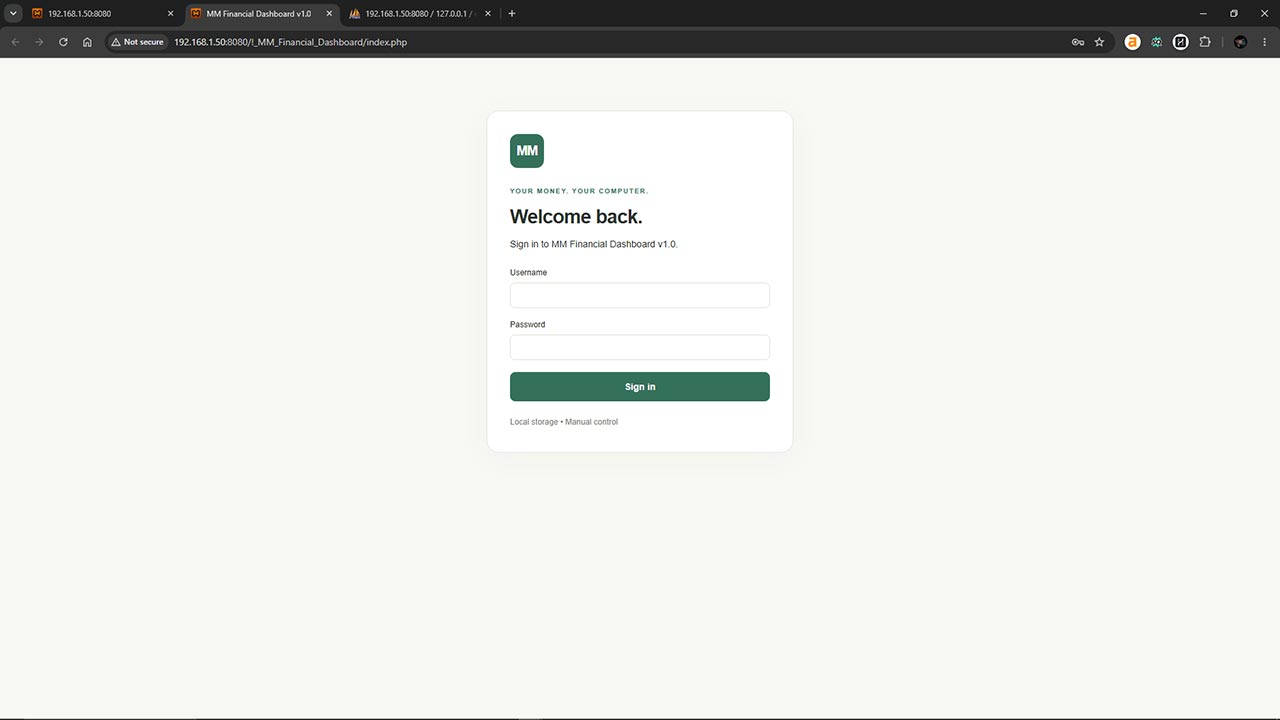
MM Financial Dashboard v1.0 brings accounts, transactions, budgets, and spending reports into one application running on a local web server. It uses PHP, MySQL, JavaScript, HTML, and CSS, with XAMPP providing the environment.
The structure separates three responsibilities: presenting information, processing requests, and storing records. Understanding those pieces makes the application easier to maintain and expand.
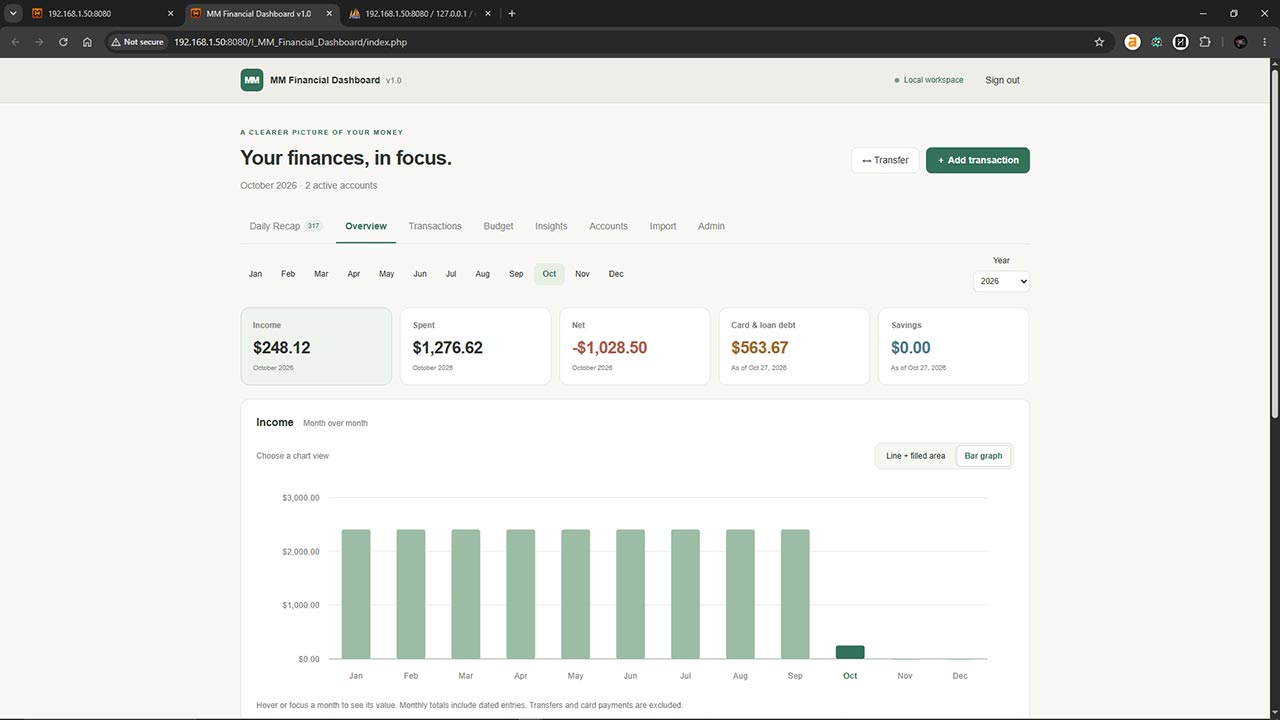
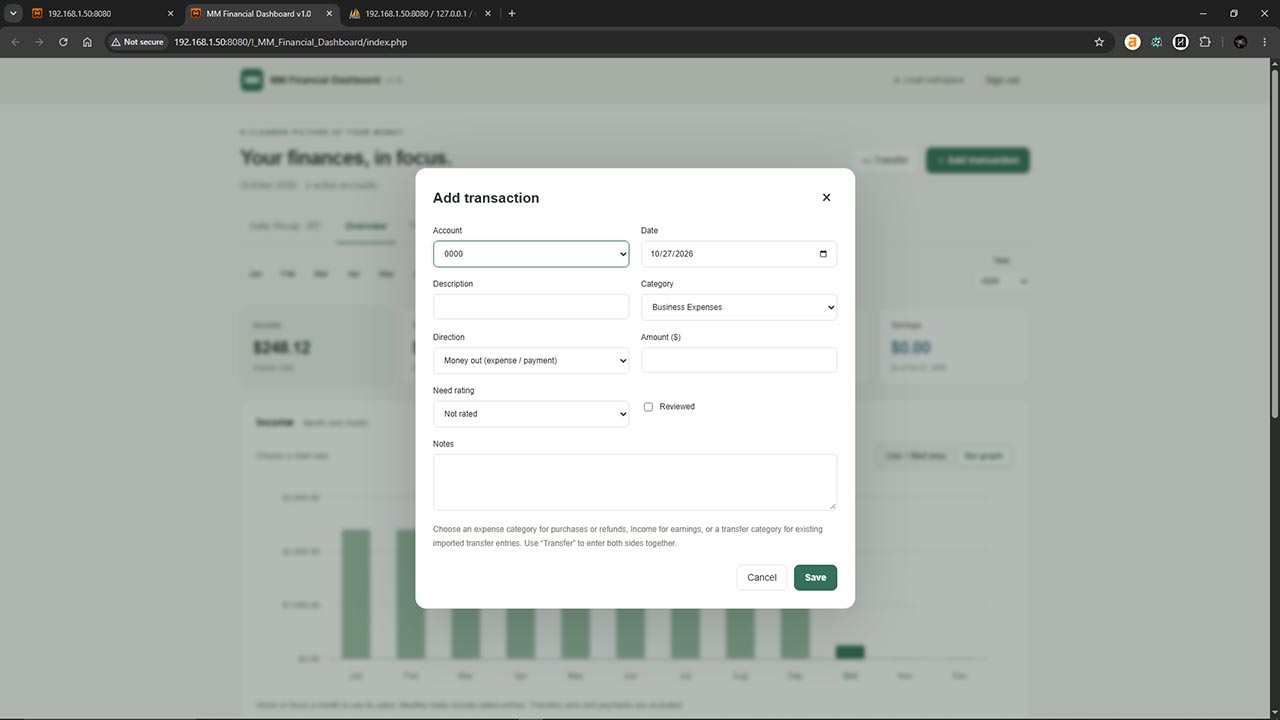
HTML provides the page structure, while CSS controls the layout, colors, spacing, and responsive design. JavaScript handles interactive features, including navigation, transaction forms, search filters, import previews, and switching between bar graphs and line charts with filled areas.
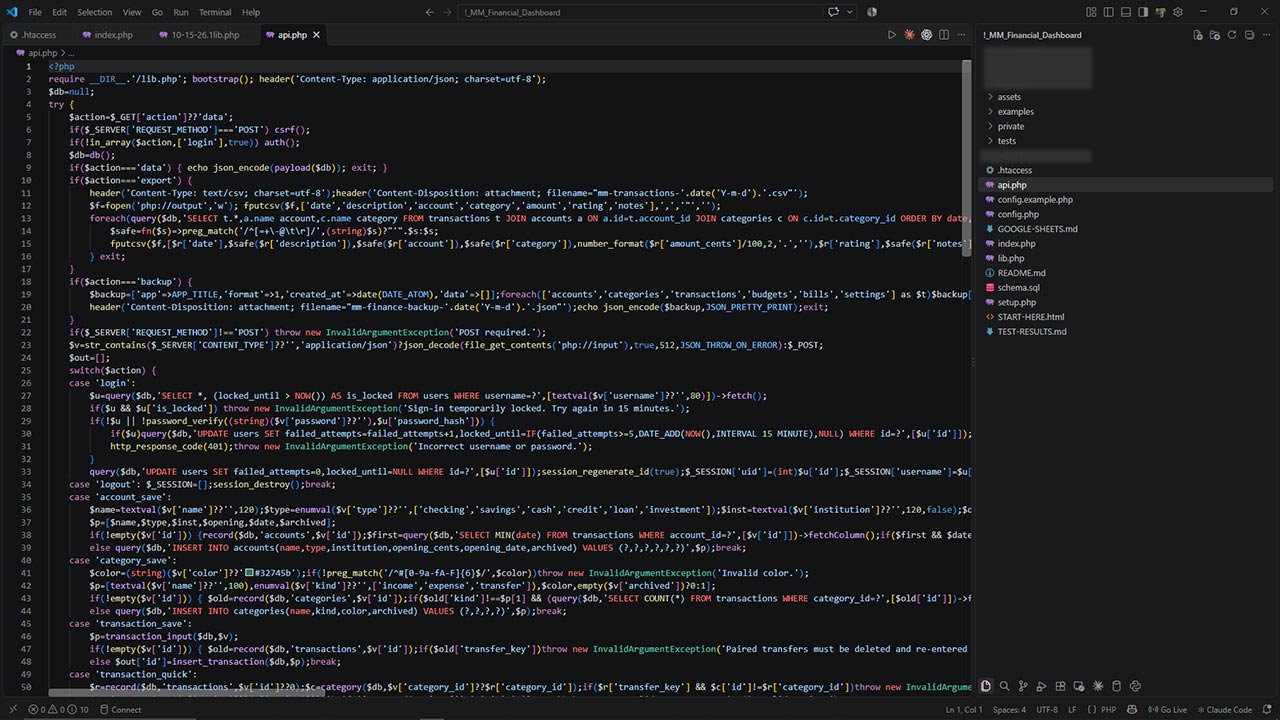
PHP works behind the interface. It checks submitted information, processes requests, manages administrator sessions, and communicates with the database. Shared functions handle tasks such as validating dates, calculating balances, and checking imported records.
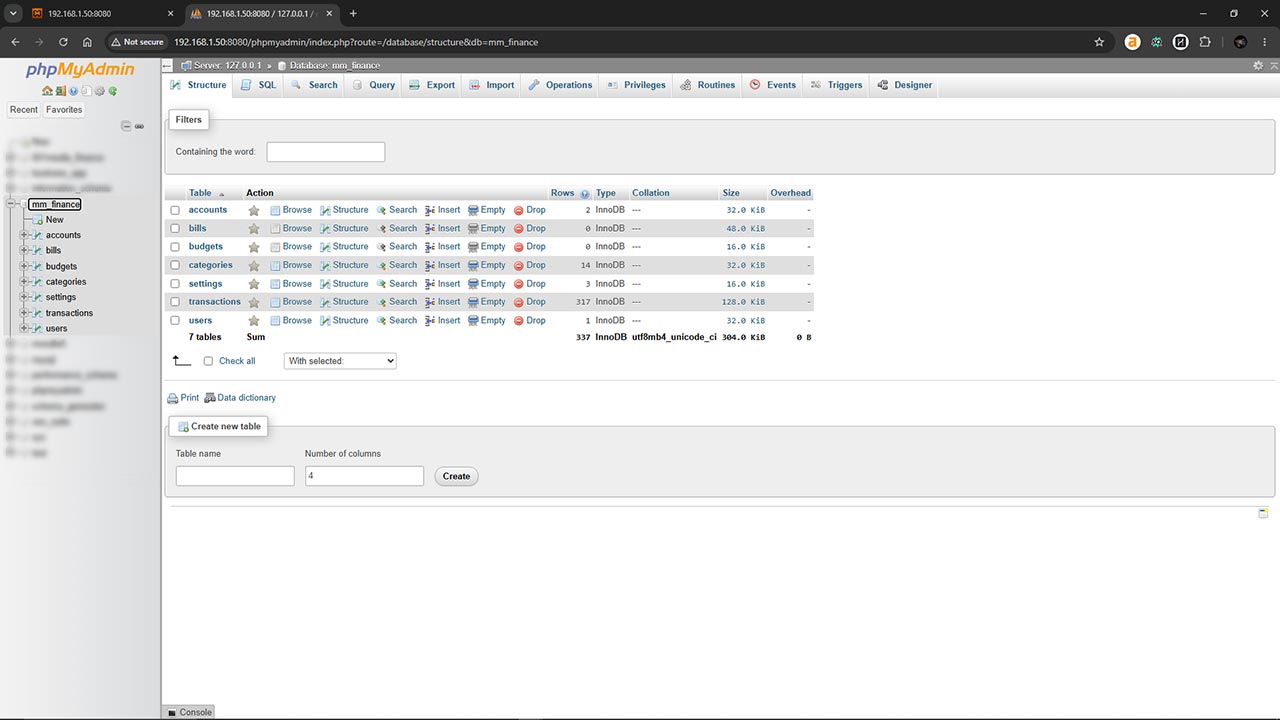
MySQL stores the information in related tables. Accounts hold opening balances and account details. Transactions connect each entry to an account and category. Separate tables store budgets, bill reminders, settings, and administrator credentials. Money is recorded as integer cents to keep stored amounts precise.
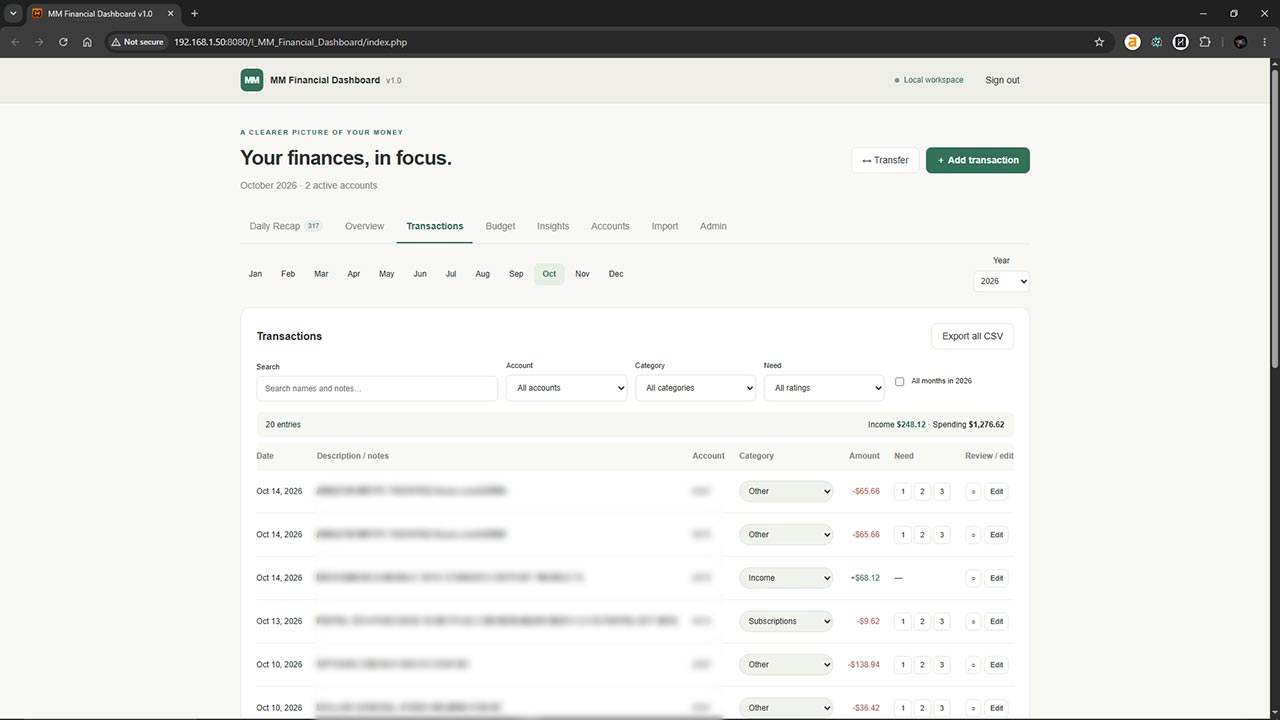
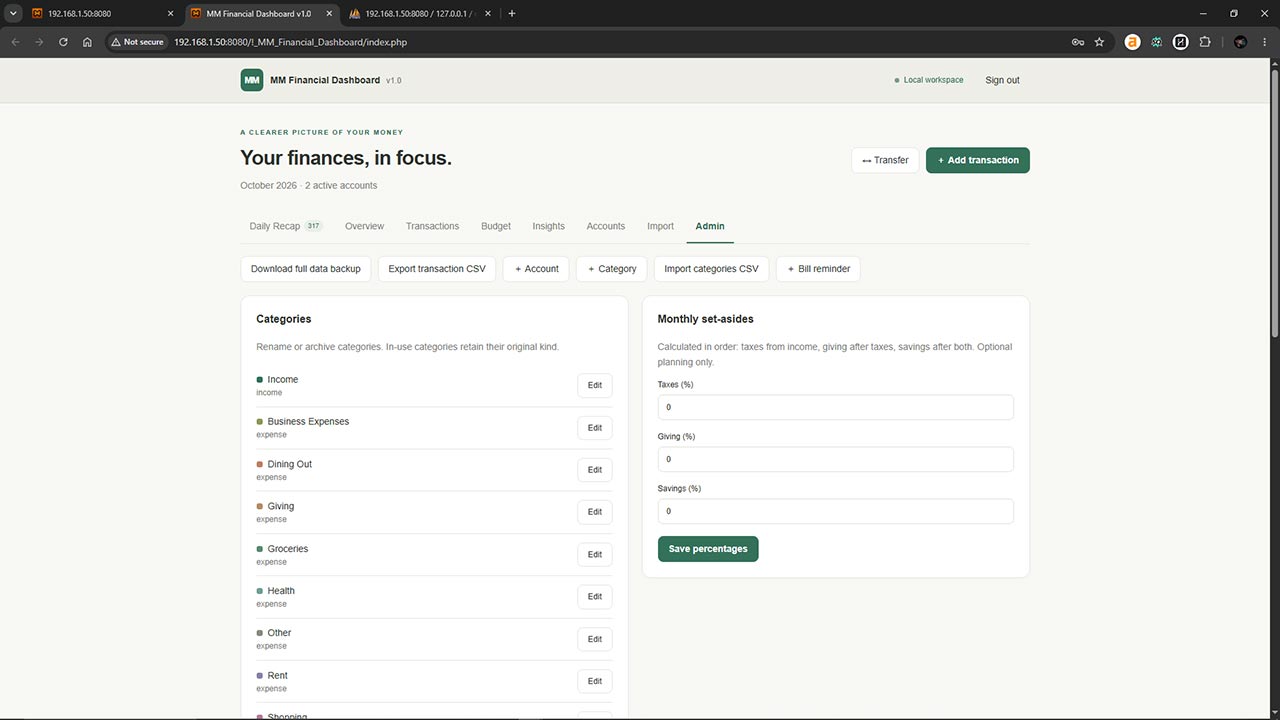
The dashboard organizes this information into Overview, Daily Recap, Transactions, Budget, Insights, Accounts, Import, and Admin views. Each view serves a specific purpose, from reviewing purchases to comparing spending against monthly limits.
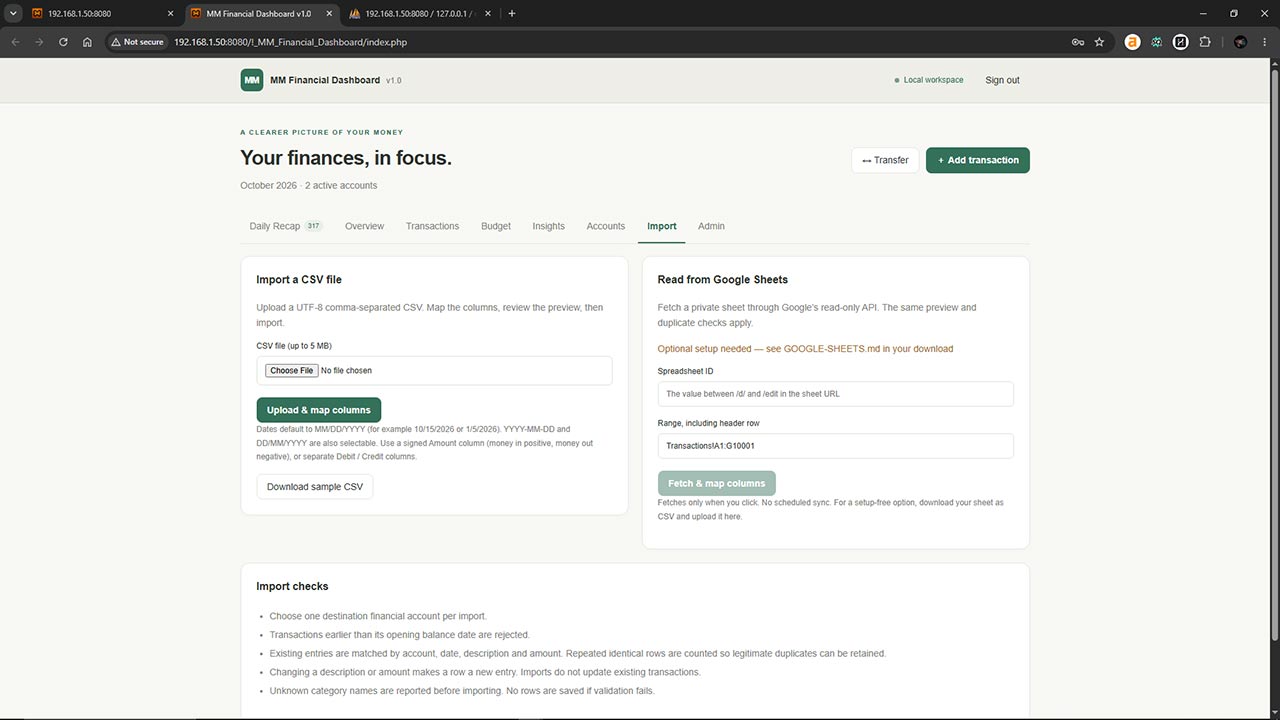
Transactions can be entered manually or imported from CSV files. The import process includes column mapping, date validation, previews, and duplicate checks. Admin supports importing category lists. Optional Google Sheets access provides another import source through a configured connection.
The application has no bank connection or background cloud service. Financial records remain in the local database, while exports and backups support recordkeeping.
This modular structure also provides a practical foundation for future development: individual components can be improved while retaining the relationships between accounts, transactions, categories, and budgets.


Leave A Comment