



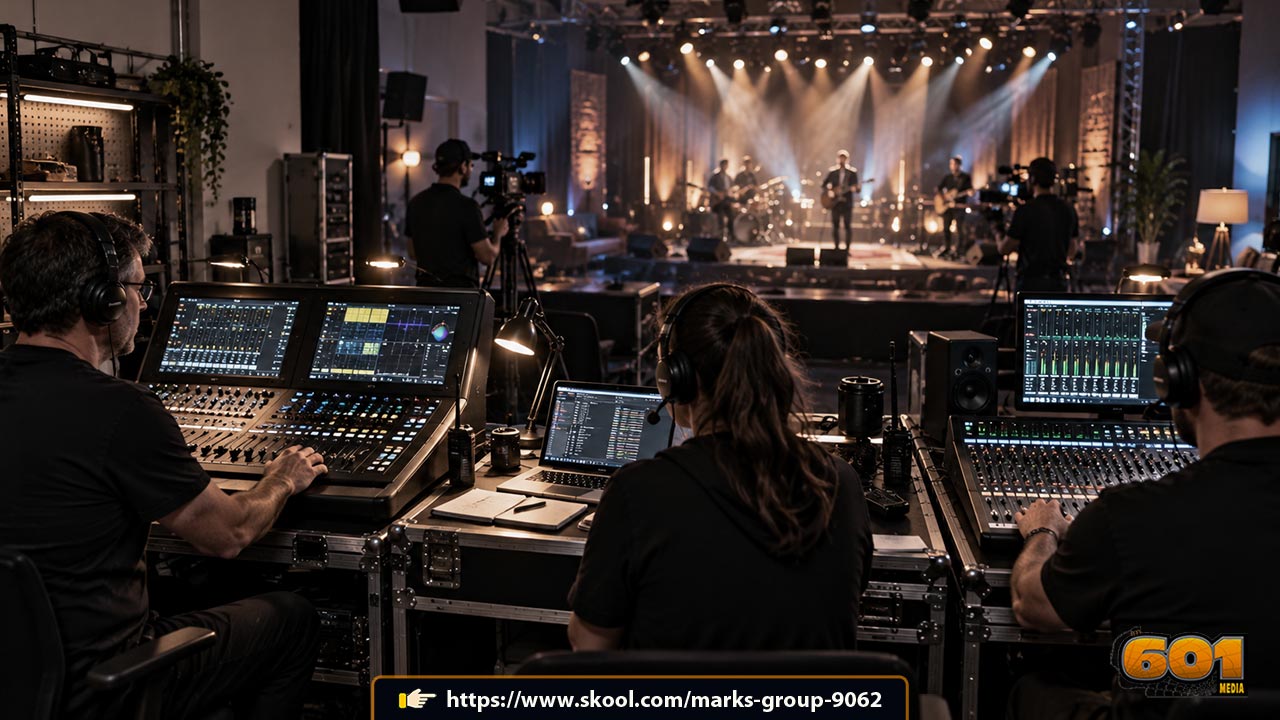
Thinking Systems When It Comes to Production
A professional home studio is more than a collection of cameras, microphones, lights, and software. It is a production system.
Every part of the studio affects the others. Audio routing impacts monitoring. Lighting affects camera settings. Network performance can affect streaming quality. File organization can determine how quickly you move from recording to editing and delivery.
That is why professionals should design the studio as one connected workflow, not as separate pieces of gear.
Start by mapping the full production path: source, capture, processing, monitoring, recording, backup, and delivery. Define where signals travel, which devices depend on each other, and what happens if something fails. Clear cable management, labeled inputs, saved presets, templates, checklists, and standardized session setups can save time and reduce mistakes.
Software matters too. Routing tools, control surfaces, automation, cloud storage, and shared production documents can make a small studio operate more like a professional control room.
The goal is not to make the studio complicated. It is to make it predictable.
When your systems are designed well, you spend less time troubleshooting and more time creating. A professional home studio should let you walk in, power up, and produce with confidence.
The best upgrade is often not another piece of gear. It is a better system.


Leave A Comment